
Composed in December 2022

Stave I Marley’s Ghost
1
Jacob Marley was Cornish. This must be distinctly understood or nothing wonderful can come of this story.
2
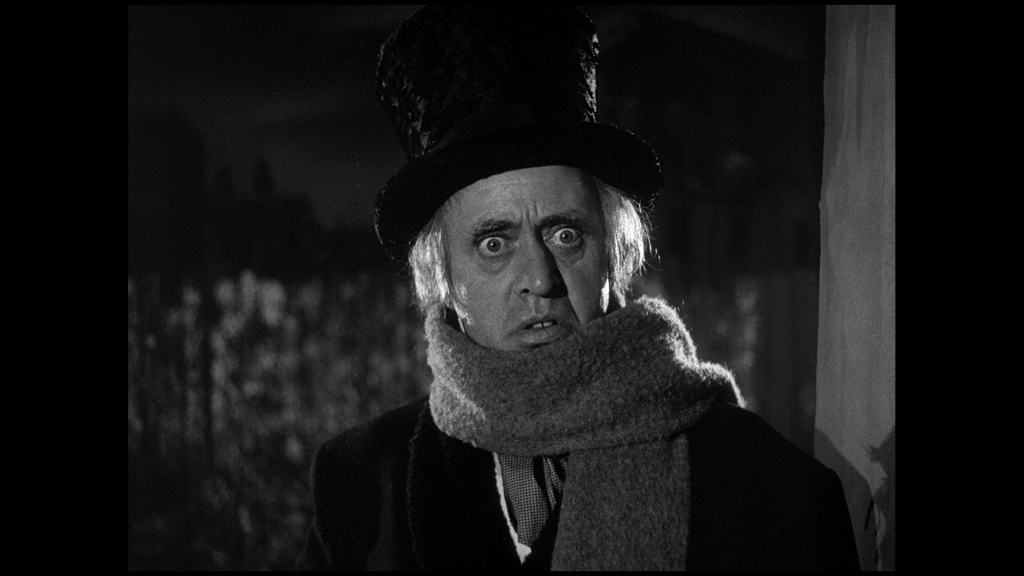
Every December, I follow a tripartite tradition of my own making centred on Dickens’s novella, A Christmas Carol. I read the book itself; I listen to an audio version – in recent years, the unabridged performance of Miriam Margolyes is favourite; and I watch the classic 1951 film, Scrooge, starring the incomparable Alastair Sim as the eponymous lead.
3
In A Christmas Carol, Dickens takes a satirical swipe at the ‘scarcity economics’ theory promulgated by the Eighteenth-Century economist, Thomas Malthus. His scare-mongering ideas suggested that a rising population would sink the economy using up resources, leading to shortages. At the beginning of the story, Scrooge is clearly a signed-up Malthusiast, with some rather blunt ideas about the poor and destitute: ‘If they would rather die they had better do it and decrease the surplus population’. Dickens takes a more optimistic, Adam Smithian approach with a belief that the peaceful and abundant supply of goods, and the confident spending on and purchase of the same, could support a growing population in relative prosperity. By the end of the story, Scrooge is a convert, indulging in the retail therapy of flashing his cash on oversized turkeys and coal scuttles. And, as we are told by the narrator, Tiny Tim, ‘who did NOT die’, survives to become a symbol of a growing, healthy populace.
Stave II The First of the Three Spirits
1
Of course, there is no textual evidence that Jacob Marley was Cornish. But, in 2017, Cornish historian, Barry West, made a case for the character, and some of the story’s settings, having a strong Cornwall connection. West followed a trail starting, appropriately, at the The Pickwick Inn in St Issey, where the pub sign proudly boasts that Dr Henry Frederick Marley died in the village in 1908, having practised as a doctor for fifty-one years in Padstow. Moreover, that his father, Dr Miles Marley, was a good friend of Charles Dickens. In an edition of ‘The Dickensian’ journal, a letter written by Dr Marley’s granddaughter to The Daily Telegraph recounts the 1843 St Patrick’s Day dinner hosted by her grandfather, living in London before he relocated to Cornwall, at which Charles Dickens was a guest. In a discussion, she writes, on unusual surnames, ‘Dr Marley said he thought his name the most uncommon one, whereupon Dickens said, “Your name shall be a household word before the year is out.’’’ Later that year, A Christmas Carol was published, and Dickens’s prophesy borne out.
2
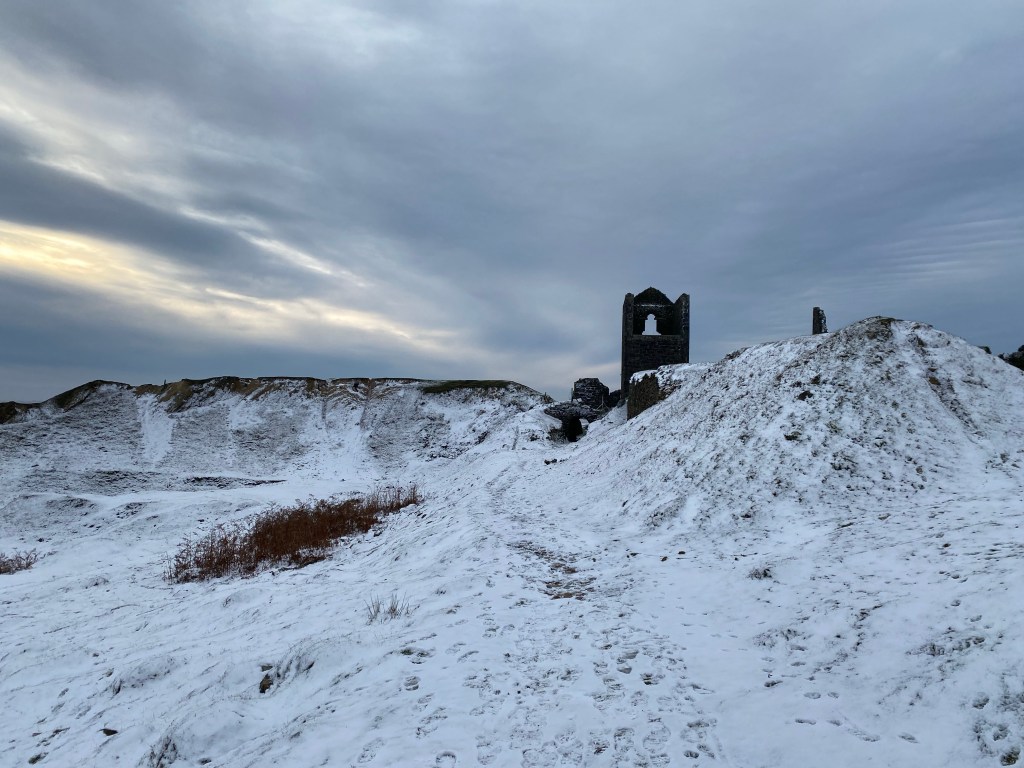
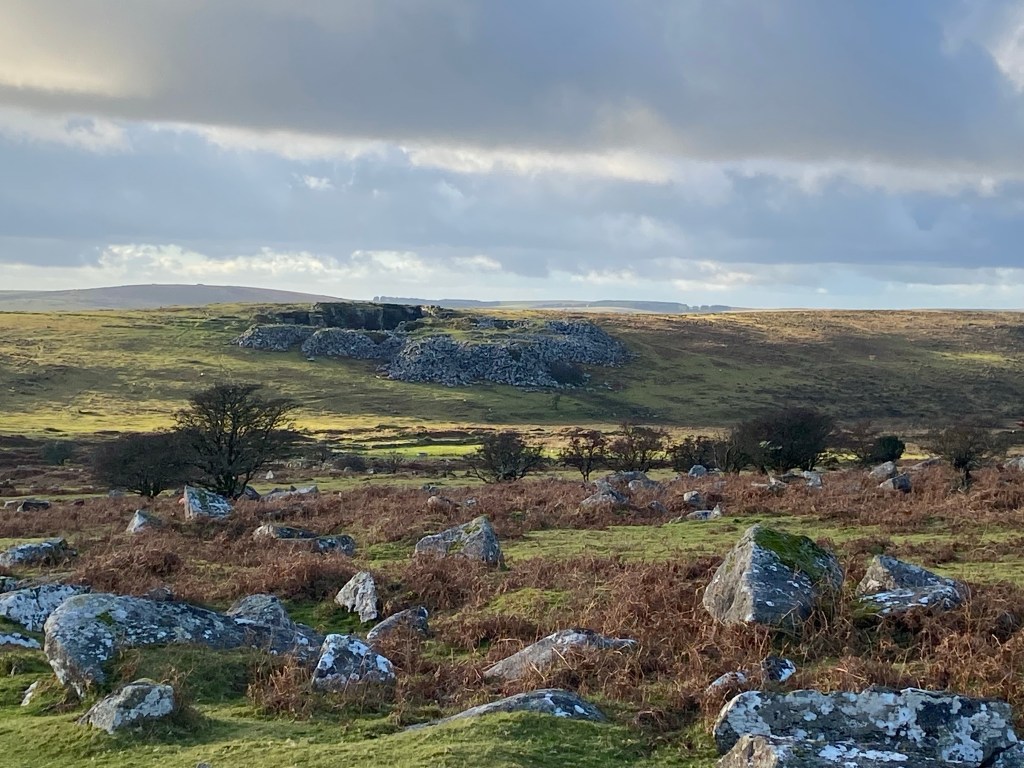
I am surprised to find something new in the story despite having read it over forty times in my life. But it suddenly strikes me that the when the Ghost of Christmas Present takes Scrooge to observe some miners, they travel across a moor. These are not coal mines in Welsh hills, as I had always thought (and growing up on the edge of the South Wales coalfield, why wouldn’t I?); and, apparently, I have only been imagining that I hear Welsh voices singing ‘Hark the Herald’ in that bit of the Alastair Sim film. But I live in Cornwall now. I walk over a part of Bodmin Moor several times a week, once the centre of the world’s copper mining industry. For the first time, I notice that Dickens refers to a moor. It suddenly dawns on me that he must been writing about Cornish mines – probably the tin ones, not the Welsh coal sort. And the fact that the Ghost then takes his reclamation project over the sea to a lighthouse now makes sense. Not out to the Bristol Channel over Cardiff Bay or Barry Island, but to the Atlantic, probably over Land’s End. I’m sure I’m right but I’ll Google to make sure.
3
In Christmas 2022, capitalism is going badly wrong. We seem to have our own version of scarcity economics. Turkeys are in short supply, never mind geese. The cause is not just that overfed poultry is beyond the purse of the ordinary family, as it was for the Cratchitts. A virulent strain of avian flu has forced farms to cull millions of birds. Those that survive are also expensive to rear because spiralling inflation in feed – in part the result of Russia’s war against Ukraine – is pushing the cost of producing the centrepiece of the Christmas table to heights unprecedented in modern times. Traditional turkey trimmings are also under threat. The rising cost of two other ‘F’s – fuel and fertiliser – is resulting in a shortage of fruit, vegetables, eggs and pork. Whither the fate of this year’s Brussels sprouts and pigs in blankets?
Stave III The Second of the Three Spirits
1
It is well documented that Dickens visited Cornwall several times in his life, including before the publication of A Christmas Carol. ‘The Dickensian’ records that he said he wanted to go to the most remote parts of Cornwall and he wrote letters about visiting Land’s End, Rock and Tintagel. Barry West makes a compelling case that the descriptions in the story are based on Dickens’s memories of the Cornish landscape:
And now, without a word of warning from the Ghost, they stood upon a bleak and desert moor, where monstrous masses of rude stone were cast about, as though it were the burial-place of giants; and water spread itself wheresoever it listed — or would have done so, but for the frost that held it prisoner; and nothing grew but moss and furze, and coarse rank grass. Down in the west the setting sun had left a streak of fiery red, which glared upon the desolation for an instant, like a sullen eye, and frowning lower, lower, lower yet, was lost in the thick gloom of darkest night.
West also argues that there is incontrovertible evidence that the lighthouse Scrooge and the Ghost visit next is the original Longships Lighthouse, an active Nineteenth Century lighthouse about two miles off the coast of Land’s End.
2
This surprise discovery about the story has proved to me, once again, that context and reader response is all. My post-structuralist reading hung on recognizing signifiers in the text that reflected my experience, location and context. Where mining once meant coal and Wales, the place where I grew up, it has now been replaced by the Cornish Moor, tin and copper mining, lighthouses and rugged coastlines. It remains to be seen whether worries about the future of the planet – environmental damage, over-use of the Earth’s resources and an ever-increasing global population – turn me into a Twenty-First Century Malthusian.
3
Dickens is clearly very concerned that his story highlights the plight of the urban working-classes; that it kickstarts the consciences of those making their fortunes on the backs of the hard labour and low wages of the poor into using their wealth more responsibly, morally, pragmatically; to heed the double threat of ‘ignorance’ and ‘want’ to the peace and prosperity of all.
As a fable making a hard-hitting moral and political point, it stands next to Swift’s A Modest Proposal in its impact, quality of writing and triumph of imagination. It is somewhat surprising, therefore, that some of the most memorable passages are of opulent descriptions of food. One might be tempted to see this as a joke played in very bad taste on the very people for whom Dickens is trying to be an advocate. But this is the free trade nirvana of plenty that Dickens wishes for all, and the descriptions are glorious in the animation, colour and vividness of their language.
If there’s a joke to be found, it’s on us in our post-Brexit dystopia, with dodgy supply chains, shortages in seasonal labour and depleted supermarket shelves. In any case, our preference now is for fast and processed food over the kind of highly nutritious produce so deliciously described by Dickens, fare we might enjoy watching celebrity chefs preparing but which we either can’t or won’t cook ourselves. I’ll retire to Bedlam!
Stave IV The Last of the Spirits
1
What did Dr Miles Marley, and his descendants, think of their family name being immortalized by one of the greatest writers who ever lived in one of the most famous and popular stories ever written? In 2021, Christopher Marley, a septuagenarian pensioner from Kent met up with Barry West as a result of researching his surprising family history. At the tombstone of his great great grandfather in the graveyard of St Endellion Church near Port Isaac, Christopher revealed to the historian that his childhood nickname was ’Jake’, while not realizing the direct link with the family’s literary namesake. As a child, he had even auditioned for the part of Jacob Marley in his school’s Christmas play but was given the role of Scrooge’s cleaner instead – actually the better part if you play it like Eileen Harrison in the 1951 film, who utters the peerless line about the dying Mr Marley, ‘He’s breathing very queer, when he does breathe at all.’
2
In December 2019, a few years before we re-locate to Cornwall, having lived nearly thirty-five years in London, we find ourselves at Smithfield market on the morning of Christmas Eve. We are astonished by what we see. The central arched thoroughfare between the two halves of the building is thronged with several hundred people bidding for the various joints of meat and poultry which the traders are selling off before shutting up shop for the holiday. The atmosphere is high-spirited, carnivalesque, hands waving wads of notes towards the auctioneers and winning bids met with uproarious applause and cheering. It is truly Dickensian. We don’t know then, but the spectacle will not be repeated the following year, or the year after that, as the wings of Christmas are clipped by Covid. I don’t know whether it will resume in 2022, especially with the scarcity of poultry. Notwithstanding, the market is soon to leave its historical site of eight hundred years in the City of London for Dagenham, and I can’t see such an extravaganza of flesh and foul happening there.
3
Dickens’s use of simile, metaphor, personification and anthropomorphism is legendary and incomparable in the English language. Here he is, on top form in A Christmas Carol, clearly showing the British in 1843 doing better by their greengrocers than we are one hundred and seventy-nine years later:
The poulterers’ shops were still half open, and the fruiterers’ were radiant in their glory. There were great, round, pot-bellied baskets of chestnuts, shaped like the waistcoats of jolly old gentlemen, lolling at the doors, and tumbling out into the street in their apoplectic opulence. There were ruddy, brown-faced, broad-girthed Spanish Onions, shining in the fatness of their growth like Spanish Friars, and winking from their shelves in wanton slyness at the girls as they went by, and glanced demurely at the hung-up mistletoe. There were pears and apples, clustered high in blooming pyramids; there were bunches of grapes, made, in the shopkeepers’ benevolence to dangle from conspicuous hooks, that people’s mouths might water gratis as they passed; there were piles of filberts, mossy and brown, recalling, in their fragrance, ancient walks among the woods, and pleasant shufflings ankle deep through withered leaves; there were Norfolk Biffins, squat and swarthy, setting off the yellow of the oranges and lemons, and, in the great compactness of their juicy persons, urgently entreating and beseeching to be carried home in paper bags and eaten after dinner.
Stave V The End of it
I used the word ‘notwithstanding’ earlier. It is a word I first encountered in A Christmas Carol and which I have enjoyed using in my prose ever since I learnt what it meant and how to deploy it in a sentence. It came to my attention because my father made such a point of ridiculing Michael Hordern, playing Jacob Marley in the 1951 film, when he says it in a direct quotation from the original Dickens. There’s nothing grammatically wrong with it in the sentence – it is Dickens after all – but it was a word that my father clearly saw as an affectation, ‘posh’, and absurd. In defiance of his mockery, and because of its correctness and concision to my ears, I have loved the word ever since. My father’s derision, notwithstanding.
 Robert James-Robbins
3 responses to “Marley’s Ghost, Notwithstanding”
I absolutely love this piece. Loved it when I read it before, and enjoyed even more this morning. It’s beginning to feel a lot like Christmas now!
LikeLike
Thank you, Rita. I’ll will start my annual re-reading of the great story later today.
LikeLiked by 1 person
And we have downloaded the reading by Ms Margolyes, to listen to on our way to Stratford, on your recommendation.
LikeLiked by 1 person