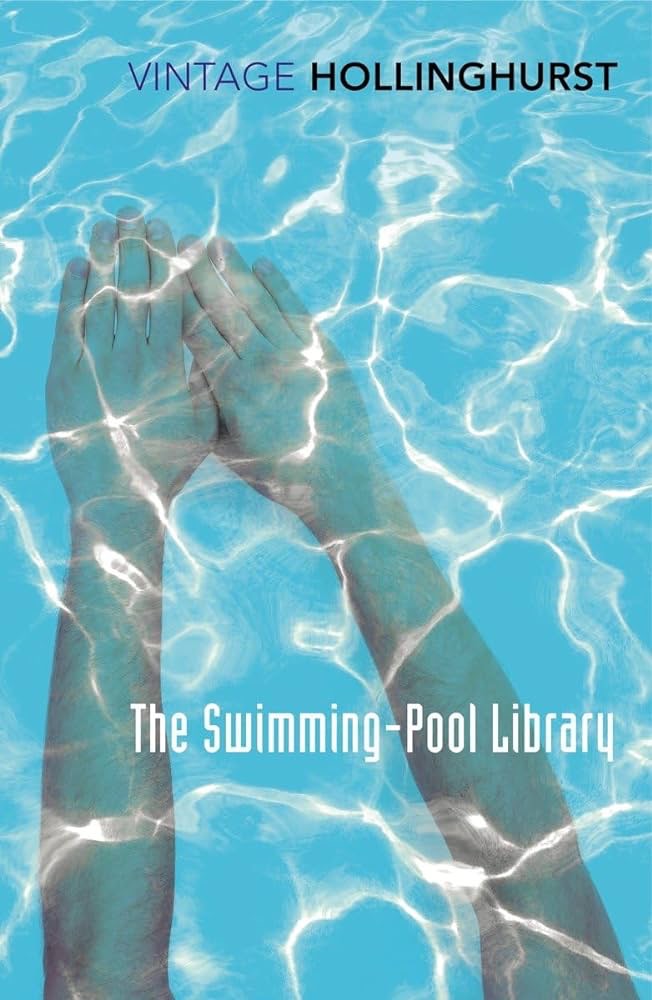
A chance discovery that the novelist Alan Hollinghurst has a new book coming out in the Autumn of 2024 has prompted me to begin a retrospective of the Hollinghurst ‘oeuvre’ of six novels, beginning with his 1988 debut masterpiece, The Swimming-Pool Library. (What will become his seventh is currently ‘Untitled’ on some websites, ‘Our Evenings’ according to others, the latter making me keep my fingers crossed that a third option, more inspiring or just easier to say, actually makes it to the cover).
Re-reading The Swimming-Pool Library for the first time in over thirty years has been a very rewarding experience. The depiction of the life of a gay man, both in the time before homosexuality was decriminalized in 1967 (the day before I was born, as it happens) and also shortly before the scourge of Aids took its terrible toll, is described with unapologetic boldness and in Hollinghurst’s (now) trademark brilliant style. John Maier, writing in ‘The Times’ in 2021, could not hide his joy in both the novel’s subject matter nor its author’s prose:
William Beckwith, Hollinghurst’s protagonist, cruises, more or less literally, through life, picking up men wherever he finds them: in hotel bars, in X-rated cinemas and on the Underground. Beckwith is handsome, clever and (nouveau) rich.He is also lusty and lustful, a delinquent 25-year-old Wykehamist…an irresistible, dissipated character. Like a figure drawn from a Hogarth engraving, he makes a rakish progress through a series of raunchy tableaux, in his case centred on the all-male Corinthian Club, where he swims and indulges the general atmosphere of amused mutual appreciation. (“In a few seconds the hard-on might pass from one end of the [showers] to the other with the foolish perfection of a Busby Berkeley routine.” “Foolish perfection” — isn’t that terrific?)
The novel also has an excellent plot which coyly hides itself for a long while, from the protagonist as much as from the reader.
A contemporaneous review of The Swimming-Pool Library in the ‘London Review of Books’ is by John Lanchester, whose own first novel, The Debt to Pleasure, in my opinion, he has yet to better in subsequent works. Lanchester’s review of Hollinghurst (and secondly Edmund White’s The Beautiful Room is Empty) doesn’t miss a beat, from the excellent title ‘Catch 28’ to the excoriating denunciation of the infamous clause of the Local Government Act 1988, from which the review gets its clever name.
Section or Clause 28 had just come into force when Lanchester was writing his review and stated that local authorities ‘shall not intentionally promote homosexuality or publish material with the intention of promoting homosexuality…or promote the teaching in any maintained school of the acceptability of homosexuality as a pretended family relationship’.
Just typing that takes my breath away – and the fact that it was not removed from the statute book until 2003 – so I’m leaving the final word to Lanchester (before continuing my Hollinghurst retrospective with The Folding Star):
Of course, the clause is so badly drafted that no one quite knows what its practical consequences will be. The ban on spending public money on the ‘promotion’ of those positive images [of homosexuality] might affect anything from the acquisition of library books to the licensing of cinemas. It is very likely to prevent council support for specifically gay causes – helplines and counselling services included. Even if the clause knew what it were doing – even if, say, it were narrowly and effectively drafted with the sole purpose of preventing the appearance on school library lists of Cordelia lives with Roger and Abdul, or whatever – it would be a stupid and pernicious piece of legislation. But there is something especially depressing in the way the clause seems to bungle away our liberties. It entrusts them to the courts and to the mad mullahs who preside in them.
This piece of creative nonfiction was featured in the inaugural issue of the Liennek Journal in July 2022. I was reminded of it yesterday when I took my sister and her family (visiting from Australia) to the Padstow Christmas Festival and we ended the day with a walk to view the Camel Estuary as it stretches out to sea.
The Padstow Mermaid was shot for love by a local man. Accounts differ on the details. He did it either out of wounded pride when she refused to reciprocate his love or as an act of desperate self-defence when she, having fallen head over tail for him, tried to drag him beneath the waves. Her revenge is the Doom Bar sandbank between Hawker’s Cove and Trebetherick. How she formed this perilous submerged ridge is, again, a point of debate. In one version of events, she flung a handful of sand into the water. In another, she cursed the harbour and raised a tempest. Whatever the truth, this sand hazard has proved tricky for centuries-worth of craft to navigate: the waters between Padstow and the open sea are deceptively tranquil. The Doom Bar’s litany of destruction, recorded since 1800, numbers over six hundred. It is a heavy albatross around the neck of the little fishing town.
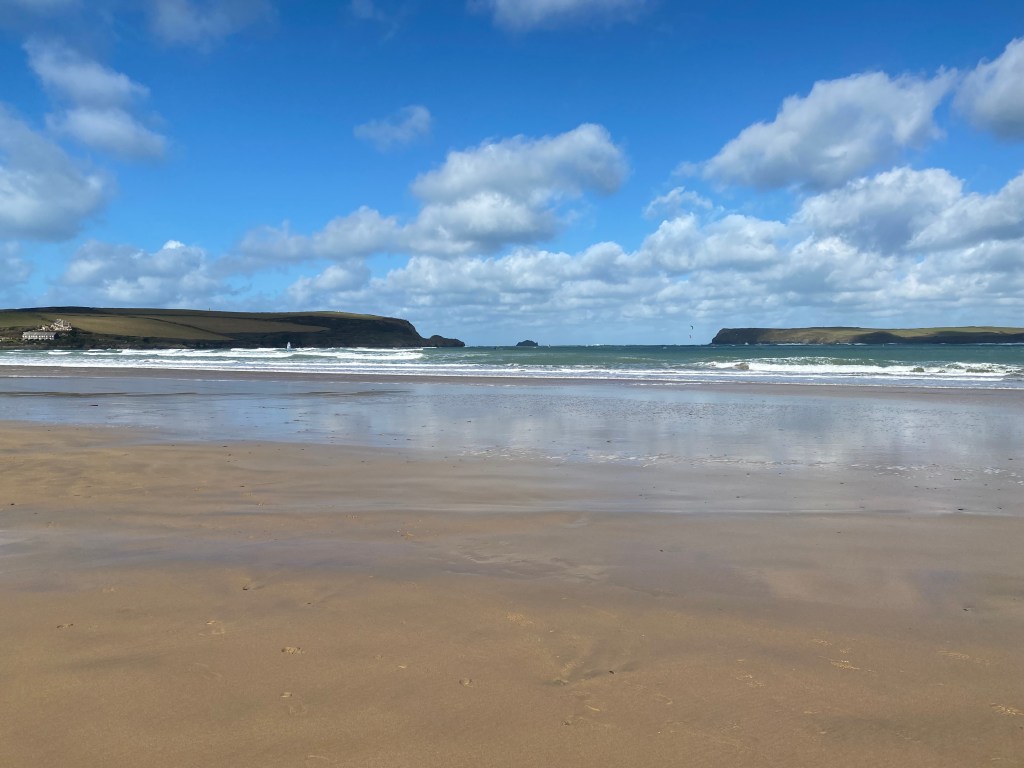
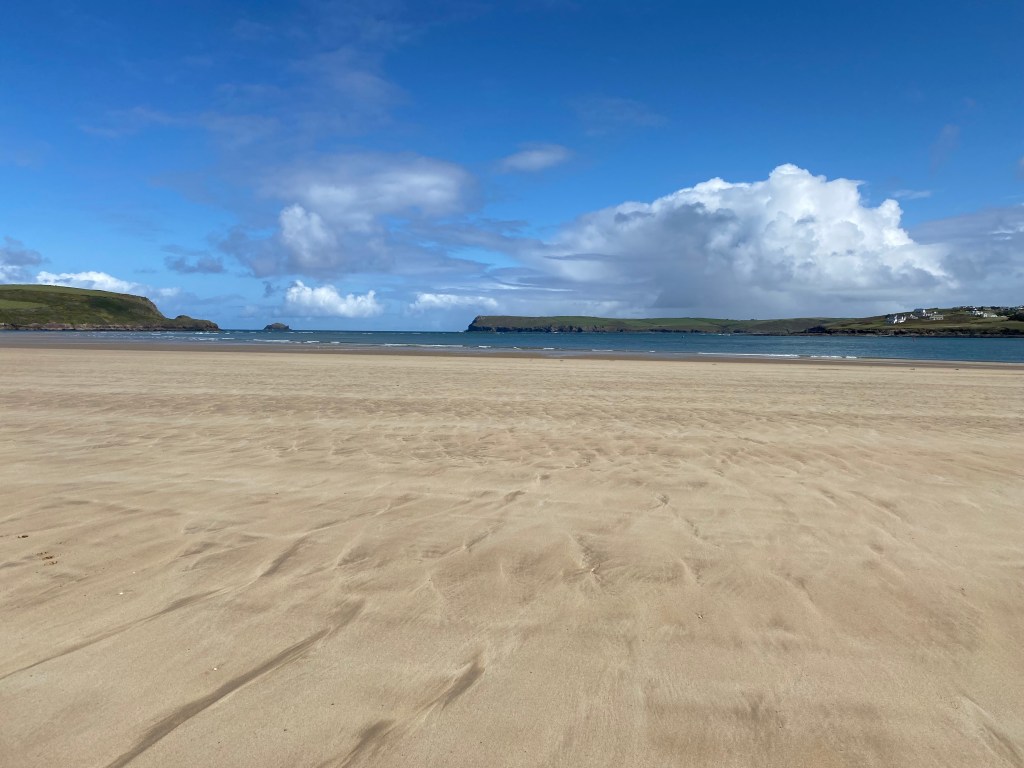
Padstow has thousands of visitors but remarkably few venture beyond the town’s bustling commercial centre. Fewer get beyond the war memorial at St Saviour’s Point, a steepish walk only minutes around the corner. But those that do cannot fail to appreciate the extraordinary view of the Camel Estuary that opens up around them as they climb the hill. To the right: the River Camel, starting its slow thirty-mile meander upstream. To the left: those deceptively tranquil waters, flanked between miles of golden sand and, further along, the south and north headlands Stepper and Pentire.
Those who walk further are richly rewarded for their perseverance when they come to Harbour Cove. Here is nearly two miles of the most pristine sand backed by picture-perfect dunes, which can be viewed either from the coastal path or the shoreline. The vista of the estuary mouth makes you catch your breath in its sweep and simplicity. The narrowing headlands, with Puffin Island caught between the two, draw your eye to the point where sea meets ocean.
Due to the seabed’s shallow incline, the scene changes constantly with the tide. When the tide is high, Harbour and Hawker coves are cut off from one another, the only land access the coastal path cut through to the dunes. When the tide is low, you have to fight the illusion that you can wade across to Rock, Polzeath, and Trebetherick: a deep channel keeps the two sides apart, a natural and symbolic divide. Those doppelgängersands may be more popular (not least with ex-Prime Ministers), but those on the Padstow side are never crowded, even in the height of summer.
I owe my appreciation and enjoyment of this Cornish idyll to Rick Stein, at whose Seafood Restaurant we celebrated my thirtieth birthday in July 1997. Just two years earlier, his first BBC television series not only tickled our foodie tastebuds but kick-started the Stein Phenomenon, which has divided opinion in Padstow—if not the whole of Cornwall—ever since.
On the day itself, we deliberately allowed the high tide to maroon us on the rocks between the coves. In the hours before and after the sea’s ebb and flow, we had the beach almost entirely to ourselves. The weather, though overcast, was warm and we thought nothing of the invisible ultraviolet rays bearing down on our faces—at least, not until looking at the photos of us posing outside the restaurant that evening, our shining noses captured for posterity in Falstaffian embarrassment before a drop had passed our lips.
Our sunburned skin peeled, healed, and was forgotten quickly, but my love for the estuary grew exponentially. Happy memories of subsequent visits abound—as a couple, a family (nuclear and extended), with friends and, sublimely, on my own, sitting on the white sand with my back to the dunes and the sea glimpsed above the rim of my novel. One moment, however, endures and dominates, filling me with emotion for both place and person. Applause! Clapping! Whistling! Whooping! An audience of beautiful, lounging twenty-somethings, years away from the responsibilities of parenthood, rise to their feet in admiration as our five-year-old son cartwheels along the beach, over and over, again and again, for yards without pause. It’s as if he’s picked up on the salty air the irresistible song of the Padstow siren, and she’s luring him to his doom among the waves like a sea-based pied piper. Except, no. Not this chip off the block. He is behaving as if he has the world pirouetting at his head as well as his feet, his destiny fearlessly gripped in both of his own hands.
Jacob Marley was Cornish. This must be distinctly understood or nothing wonderful can come of this story.
2
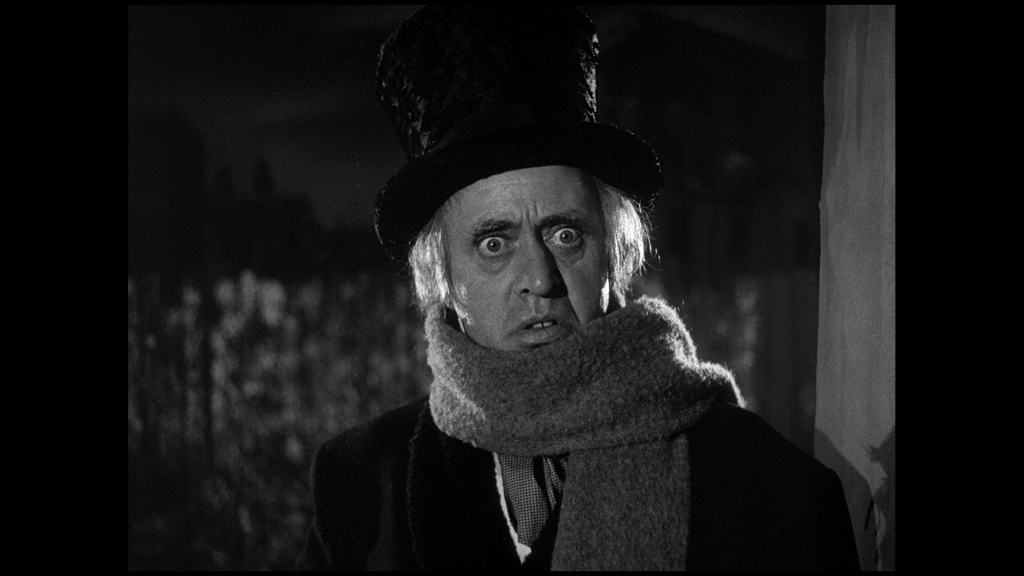
Every December, I follow a tripartite tradition of my own making centred on Dickens’s novella, A Christmas Carol. I read the book itself; I listen to an audio version – in recent years, the unabridged performance of Miriam Margolyes is favourite; and I watch the classic 1951 film, Scrooge, starring the incomparable Alastair Sim as the eponymous lead.
3
In A Christmas Carol, Dickens takes a satirical swipe at the ‘scarcity economics’ theory promulgated by the Eighteenth-Century economist, Thomas Malthus. His scare-mongering ideas suggested that a rising population would sink the economy using up resources, leading to shortages. At the beginning of the story, Scrooge is clearly a signed-up Malthusiast, with some rather blunt ideas about the poor and destitute: ‘If they would rather die they had better do it and decrease the surplus population’. Dickens takes a more optimistic, Adam Smithian approach with a belief that the peaceful and abundant supply of goods, and the confident spending on and purchase of the same, could support a growing population in relative prosperity. By the end of the story, Scrooge is a convert, indulging in the retail therapy of flashing his cash on oversized turkeys and coal scuttles. And, as we are told by the narrator, Tiny Tim, ‘who did NOT die’, survives to become a symbol of a growing, healthy populace.
Stave II The First of the Three Spirits
1
Of course, there is no textual evidence that Jacob Marley was Cornish. But, in 2017, Cornish historian, Barry West, made a case for the character, and some of the story’s settings, having a strong Cornwall connection. West followed a trail starting, appropriately, at the The Pickwick Inn in St Issey, where the pub sign proudly boasts that Dr Henry Frederick Marley died in the village in 1908, having practised as a doctor for fifty-one years in Padstow. Moreover, that his father, Dr Miles Marley, was a good friend of Charles Dickens. In an edition of ‘The Dickensian’ journal, a letter written by Dr Marley’s granddaughter to The Daily Telegraph recounts the 1843 St Patrick’s Day dinner hosted by her grandfather, living in London before he relocated to Cornwall, at which Charles Dickens was a guest. In a discussion, she writes, on unusual surnames, ‘Dr Marley said he thought his name the most uncommon one, whereupon Dickens said, “Your name shall be a household word before the year is out.’’’ Later that year, A Christmas Carol was published, and Dickens’s prophesy borne out.
2
I am surprised to find something new in the story despite having read it over forty times in my life. But it suddenly strikes me that the when the Ghost of Christmas Present takes Scrooge to observe some miners, they travel across a moor. These are not coal mines in Welsh hills, as I had always thought (and growing up on the edge of the South Wales coalfield, why wouldn’t I?); and, apparently, I have only been imagining that I hear Welsh voices singing ‘Hark the Herald’ in that bit of the Alastair Sim film. But I live in Cornwall now. I walk over a part of Bodmin Moor several times a week, once the centre of the world’s copper mining industry. For the first time, I notice that Dickens refers to a moor. It suddenly dawns on me that he must been writing about Cornish mines – probably the tin ones, not the Welsh coal sort. And the fact that the Ghost then takes his reclamation project over the sea to a lighthouse now makes sense. Not out to the Bristol Channel over Cardiff Bay or Barry Island, but to the Atlantic, probably over Land’s End. I’m sure I’m right but I’ll Google to make sure.
3
In Christmas 2022, capitalism is going badly wrong. We seem to have our own version of scarcity economics. Turkeys are in short supply, never mind geese. The cause is not just that overfed poultry is beyond the purse of the ordinary family, as it was for the Cratchitts. A virulent strain of avian flu has forced farms to cull millions of birds. Those that survive are also expensive to rear because spiralling inflation in feed – in part the result of Russia’s war against Ukraine – is pushing the cost of producing the centrepiece of the Christmas table to heights unprecedented in modern times. Traditional turkey trimmings are also under threat. The rising cost of two other ‘F’s – fuel and fertiliser – is resulting in a shortage of fruit, vegetables, eggs and pork. Whither the fate of this year’s Brussels sprouts and pigs in blankets?
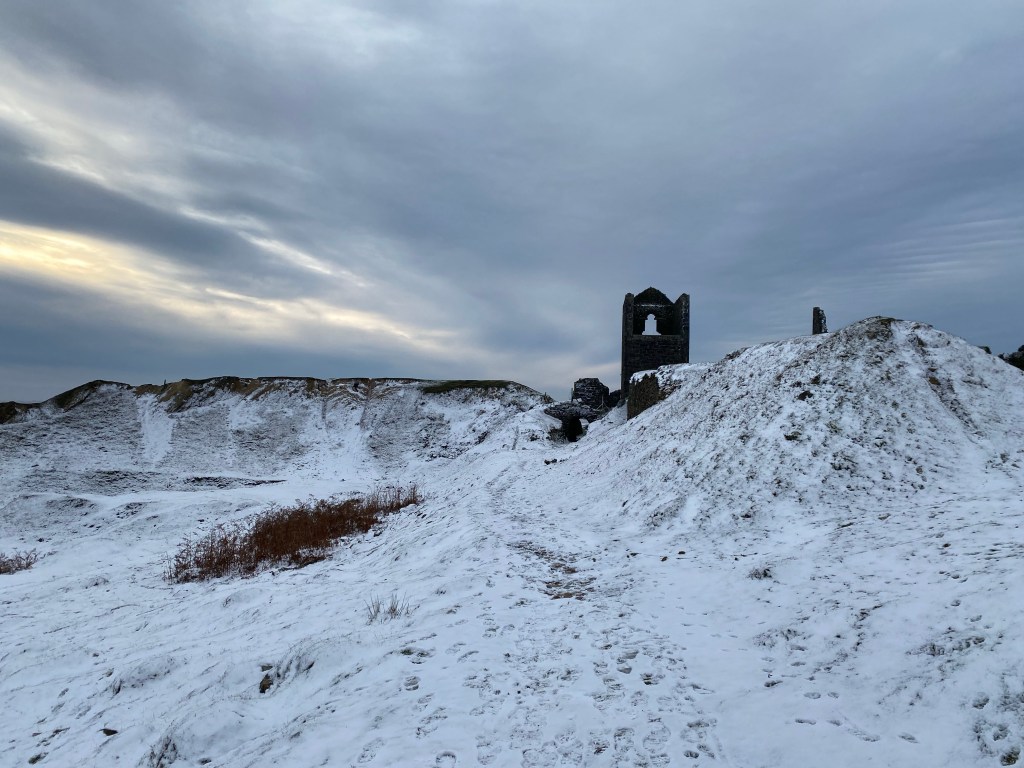
Holman’s Engine House, Bodmin Moor
Stave III The Second of the Three Spirits
1
It is well documented that Dickens visited Cornwall several times in his life, including before the publication of A Christmas Carol. ‘The Dickensian’ records that he said he wanted to go to the most remote parts of Cornwall and he wrote letters about visiting Land’s End, Rock and Tintagel. Barry West makes a compelling case that the descriptions in the story are based on Dickens’s memories of the Cornish landscape:
And now, without a word of warning from the Ghost, they stood upon a bleak and desert moor, where monstrous masses of rude stone were cast about, as though it were the burial-place of giants; and water spread itself wheresoever it listed — or would have done so, but for the frost that held it prisoner; and nothing grew but moss and furze, and coarse rank grass.Down in the west the setting sun had left a streak of fiery red, which glared upon the desolation for an instant, like a sullen eye, and frowning lower, lower, lower yet, was lost in the thick gloom of darkest night.
West also argues that there is incontrovertible evidence that the lighthouse Scrooge and the Ghost visit next is the original Longships Lighthouse, an active Nineteenth Century lighthouse about two miles off the coast of Land’s End.
2
This surprise discovery about the story has proved to me, once again, that context and reader response is all. My post-structuralist reading hung on recognizing signifiers in the text that reflected my experience, location and context. Where mining once meant coal and Wales, the place where I grew up, it has now been replaced by the Cornish Moor, tin and copper mining, lighthouses and rugged coastlines. It remains to be seen whether worries about the future of the planet – environmental damage, over-use of the Earth’s resources and an ever-increasing global population – turn me into a Twenty-First Century Malthusian.
3
Dickens is clearly very concerned that his story highlights the plight of the urban working-classes; that it kickstarts the consciences of those making their fortunes on the backs of the hard labour and low wages of the poor into using their wealth more responsibly, morally, pragmatically; to heed the double threat of ‘ignorance’ and ‘want’ to the peace and prosperity of all.
As a fable making a hard-hitting moral and political point, it stands next to Swift’s A Modest Proposal in its impact, quality of writing and triumph of imagination. It is somewhat surprising, therefore, that some of the most memorable passages are of opulent descriptions of food. One might be tempted to see this as a joke played in very bad taste on the very people for whom Dickens is trying to be an advocate. But this is the free trade nirvana of plenty that Dickens wishes for all, and the descriptions are glorious in the animation, colour and vividness of their language.
If there’s a joke to be found, it’s on us in our post-Brexit dystopia, with dodgy supply chains, shortages in seasonal labour and depleted supermarket shelves. In any case, our preference now is for fast and processed food over the kind of highly nutritious produce so deliciously described by Dickens, fare we might enjoy watching celebrity chefs preparing but which we either can’t or won’t cook ourselves. I’ll retire to Bedlam!
Bodmin Moor, December 13, 2023
Stave IV The Last of the Spirits
1
What did Dr Miles Marley, and his descendants, think of their family name being immortalized by one of the greatest writers who ever lived in one of the most famous and popular stories ever written? In 2021, Christopher Marley, a septuagenarian pensioner from Kent met up with Barry West as a result of researching his surprising family history. At the tombstone of his great great grandfather in the graveyard of St Endellion Church near Port Isaac, Christopher revealed to the historian that his childhood nickname was ’Jake’, while not realizing the direct link with the family’s literary namesake. As a child, he had even auditioned for the part of Jacob Marley in his school’s Christmas play but was given the role of Scrooge’s cleaner instead – actually the better part if you play it like Eileen Harrison in the 1951 film, who utters the peerless line about the dying Mr Marley, ‘He’s breathing very queer, when he does breathe at all.’
2
In December 2019, a few years before we re-locate to Cornwall, having lived nearly thirty-five years in London, we find ourselves at Smithfield market on the morning of Christmas Eve. We are astonished by what we see. The central arched thoroughfare between the two halves of the building is thronged with several hundred people bidding for the various joints of meat and poultry which the traders are selling off before shutting up shop for the holiday. The atmosphere is high-spirited, carnivalesque, hands waving wads of notes towards the auctioneers and winning bids met with uproarious applause and cheering. It is truly Dickensian. We don’t know then, but the spectacle will not be repeated the following year, or the year after that, as the wings of Christmas are clipped by Covid. I don’t know whether it will resume in 2022, especially with the scarcity of poultry. Notwithstanding, the market is soon to leave its historical site of eight hundred years in the City of London for Dagenham, and I can’t see such an extravaganza of flesh and foul happening there.
3
Dickens’s use of simile, metaphor, personification and anthropomorphism is legendary and incomparable in the English language. Here he is, on top form in A Christmas Carol, clearly showing the British in 1843 doing better by their greengrocers than we are one hundred and seventy-nine years later:
The poulterers’ shops were still half open, and the fruiterers’ were radiant in their glory. There were great, round, pot-bellied baskets of chestnuts, shaped like the waistcoats of jolly old gentlemen, lolling at the doors, and tumbling out into the street in their apoplectic opulence. There were ruddy, brown-faced, broad-girthed Spanish Onions, shining in the fatness of their growth like Spanish Friars, and winking from their shelves in wanton slyness at the girls as they went by, and glanced demurely at the hung-up mistletoe. There were pears and apples, clustered high in blooming pyramids; there were bunches of grapes, made, in the shopkeepers’ benevolence to dangle from conspicuous hooks, that people’s mouths might water gratis as they passed; there were piles of filberts, mossy and brown, recalling, in their fragrance, ancient walks among the woods, and pleasant shufflings ankle deep through withered leaves; there were Norfolk Biffins, squat and swarthy, setting off the yellow of the oranges and lemons, and, in the great compactness of their juicy persons, urgently entreating and beseeching to be carried home in paper bags and eaten after dinner.
Stave V The End of it
I used the word ‘notwithstanding’ earlier. It is a word I first encountered in A Christmas Carol and which I have enjoyed using in my prose ever since I learnt what it meant and how to deploy it in a sentence. It came to my attention because my father made such a point of ridiculing Michael Hordern, playing Jacob Marley in the 1951 film, when he says it in a direct quotation from the original Dickens. There’s nothing grammatically wrong with it in the sentence – it is Dickens after all – but it was a word that my father clearly saw as an affectation, ‘posh’, and absurd. In defiance of his mockery, and because of its correctness and concision to my ears, I have loved the word ever since. My father’s derision, notwithstanding.
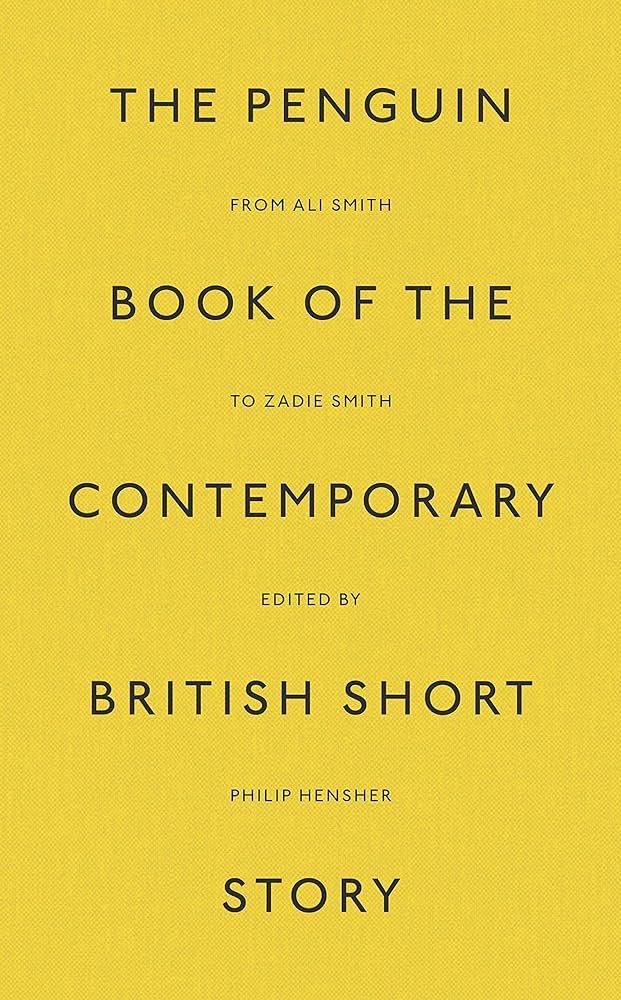
The Penguin Book of the Contemporary British Short Story (2018)
‘All the Boys’ is the first in the section entitled ‘Men’ in this collection of short stories through which I am currently working my way. The ‘boys’ are a group of friends who have grown up together in Caerphilly, South Wales, celebrating a stag weekend ahead of the wedding of one of their number. Five of the seven man-only group still live in the valleys town, the remaining two in London. At the beginning, they converge on Bristol Airport as instructed by Big Mike, the organiser of the weekend, and the groom’s best man, where he is going to reveal their destination.
I am not going to reveal much more about what happens in the story beyond the opening paragraph below. My reasons for posting about it, apart from the fact that it is very good and that the characterisation and dialogue resonated particularly with me as I grew up in Pontypool, in an adjacent Welsh valley, is that it is written entirely in the future tense:
The best man won’t tell them it’s Dublin until they get to Bristol Airport. He’ll tell them to bring euros and don’t bother packing shorts. The five travelling from Caerphilly will drink on the minibus. And Big Mike, the best man, will spend the first twenty minutes reading and rereading the A4 itinerary he typed up on MS Word. The plastic polypocket will be wedged thick with flight tickets and hostel reservations. It will be crumpled and creased from the constant hand-scrunching and metronome swatting against his suitcase – the only check-in bag on the entire trip. He’ll spend the journey to the airport telling Gareth, and anyone who listens, that Rob had better never marry again, that he couldn’t handle the stress of organizing another one of these.
The narrative continues in this vein until the very end. It’s as if the unpresent bride-to-be is the omniscient (and prescient) narrator, imagining exactly what is going to happen to her fiancé and his friends during the next forty-eight hours as she waves them off on the minibus. It gives the story a strong sense of inevitability as the narrative unfolds which is paradoxically unsettling and reassuring; it creates both a feeling that something terrible is going to befall the revellers and one which says that nothing is going to take place which would surprise or upset anyone, not least our invented narrator-fiancée.
It set me thinking about the marriage vows which the groom will make to his bride at some point in the future after the story has finished (now I’m doing it; it must be catching). Is Thomas Morris playing with the idea of the unknowability of the future in relationships set against the inherent certainty with which couples promise that they ‘will’ when they formalise those relationships? Are they making a confident declaration of future commitment or is it a futile stand against the inevitability that, ultimately, many ‘won’t’?
Only the future will tell, of course. As Morris’s interesting choice of tense in his story demonstrates admirably.
Lucrezia di Cosimo de’ Medici (detail): Bronzino (Agnolo di Cosimo), c. 1555-1565 (Galleria degli Uffizi, Florence)
Have you ever wondered how long it takes someone to die when they’ve been bricked up behind a wall, in a standing position, with so much cloth steeped in poison stuffed into their mouth that they can barely breathe never mind scream out? No, I don’t suppose you have. I don’t know the answer because you’re not in any position to notice the time when that sort of thing is happening to you. But immortalised in poetry, where things are measured spatially not temporally, I see that Mr Browning kills me off somewhere between the forty-fifth and forty-sixth line.
The narrative instigator of this outrage was not a poet but my demonstrably unloving husband. The Duke of Ferrara. Paranoid jealousy doesn’t begin to cover it. Enough to fill a book, let alone a dramatic monologue. It basically boiled down to too large an ego and too small a penis. A lethal combination. Especially for a wife. Not that I ever let on. No, I did the best I could. Soothed it, stroked it, flattered it, buttered it up, laid it on thick and sucked up to it. But it was never enough. He always needed more. It even made him suspect me of the same sort of rigmarole with others. A lady never tells, of course.
So, he had me murdered. Gave commands that dear Fra Pandolf’s painting of me (how subtly the artist coaxed the colour into my cheeks) hang on the wall behind which he had had me buried alive. Then he had the painting hidden by a curtain, like a veil (or a shroud), only he draws back. But despite the cloth and the bricks, I am not silent, as you can tell; nor at peace, because it hardly counts as a proper funeral, does it?
And now he’s at it again, sounding out my replacement. Though this time, I notice he’s being more careful to make it known to the family what he expects. Not that he is spelling it out plainly. That would mean admitting he’d made a mistake with me. Lowering himself in the eyes of his inferiors. And, as I know to my cost, in such a fashion he chooses never to stoop.
I am aware of an ambiguity, earlier on, about whether my particular rigmarole with the Duke was over his ego or his other parts. As I said, a lady never tells.
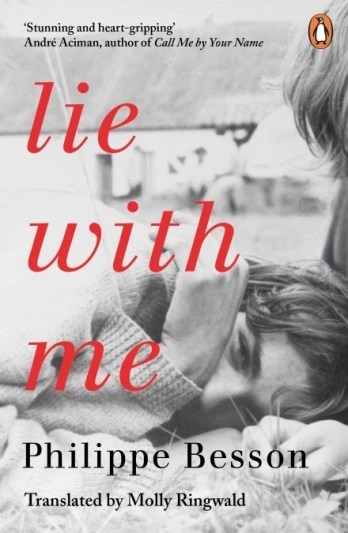
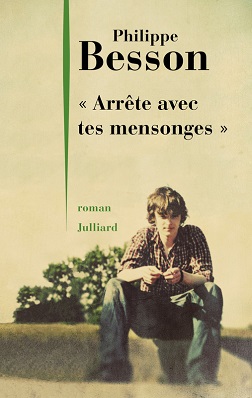
Yesterday I watched the film version of this book of the same name which I read a few weeks ago. Described in one review as the French ‘Brokeback Mountain’ with ‘impeccable manners’, it certainly moved me as much as its American roughneck older cousin did the first time I watched it. Both film and novel tell the story of an intense but short-lived teenage love affair between the main character/ narrator and another boy at his school. In middle age, and now a successful writer, the protagonist learns what has happened to his first love in the intervening years through a chance meeting with his former lover’s adult son.
While the film stays close to the story of the book, its denouement is more obviously cathartic and tender; its novel antecedent provides closure through the same plot device but not enough to wash away the taste of tragedy which suffuses both versions. The celluloid version eventually does give you an emotional embrace which it has been frustratingly keeping at arm’s-length until almost the closing credits. The novel on the other hand leaves you desperate for some kind of tactile equivalence but having to accept that any reaching out for closure can only exist over an unbridgeable expanse of time, and through words and photographs, created in the past, but present in a stark version of the truth that has had to wait to be heard until the final page.
The English title given to the novel has come under fire for not being a direct translation of the original and thereby carrying a different meaning. The original French title is Arrête avec tes mensonges – ‘stop with your lies’. This is very different to the multi-meaning of ‘lie with me’. But both titles work and Besson has clearly approved the English version.
The book is dedicated to Thomas Andrieu, the name, we eventually learn, of the narrator’s teenage lover. The narrator himself is called Philippe. The same as the author. Truth and lies, fact and fiction, fantasy and reality are key themes of the book. The fictional Philippe remembers that his mother always told him to stop with his lies, a reference to his habit of making up stories about the people he observed in real life. The information merely throws the viewer/ reader further off guard and questioning just how much of what is in front of them is fabrication and how much is literary autobiography; how much fabulation, how much autofiction.
One of the triumphs of Besson’s creation is that deciding is not the point, nor a necessity, but that thinking about it is. Like the discrepancy between the meaning of the respective French and English titles, much of the intellectual and emotional strength in the story stem from its ambiguity. Something I will bear in mind when it come to my own writing. Indeed, as I did when giving this post its title.
At midday precisely, David slips a paperback into his jacket pocket, gets up from his desk with barely a nod to his colleague opposite, takes the lift to the ground floor, leaves the building and heads briskly towards St James’s Park underground station. While working, he had just finished the half dozen rounds of sandwiches his mother makes for his lunch every day; just as, a few hours earlier, he had eaten the ones she makes for his morning break. Boarding the first Circle Line train at the furthest end of the platform, where he is more likely to find a seat, he takes out the book he will read for the next fifty minutes or so it will take the train to return to the station, leaving him with just enough time to get back to the office before the end of his allotted hour. Luckily for David, by 2009, when the line ceases to operate in a continuous loop, he will have retired, sparing him the inconvenience of interrupting his reading to board another train for the return journey.
As he reads, David does not think about his job as a quietly insignificant public servant of the lower grade and calibre. Nor about lunchtimes over thirty years ago, in his small grammar school, where for one hour every day, he would endure the unchecked insults and abuse of his peers about his physical appearance and personality. Nor those first few weeks when he tried, but could not find, the method to fit in and endear himself to his peers; when searching across the dining room for a place to eat became harder each day as his company was shunned by the other eleven-year-olds who quickly found someone of his size, looks and awkwardness a burden to sit next to beyond the unavoidability of the classroom seating plan.
As the train rattles around the tracks, David will not remember that looking for a seat in the refectory in those early days became irrelevant when an anonymous jolt to his elbow unbalanced the tray sending everything crashing to the floor amid a raucous chorus of jeering, clapping and catcalls. Nor how he asked his mother if she would provide him with something from home instead of paying for the school meals which he pretended to complain were not a patch on her cooking. Nor the daily challenge of finding a location where he could eat and read in peace; a place where sandwiches, book, or both might not be ripped from his hands and rendered uneatable or unreadable under a crushing heel.
Nowadays, nothing intrudes upon the latest work of fiction which is, Monday to Friday, the only lunchtime company with which David wishes, or is able, to engage.
At one o’clock, or thereabouts, his colleague occasionally remembers to nod to David, back at the desk opposite, as he rises to join the friends loudly sharing a joke as they collect him on the way to the canteen.
A piece of whimsy that began life in the first month of my MA and remains a personal favourite.
‘Spoons!’ enthuses Alexander Armstrong, introducing the Head-to-Head round on today’s episode of ‘Pointless’.
‘Yes. Five facts to do with spoons,’ says his towering partner in crime, Richard. ‘Finally!’
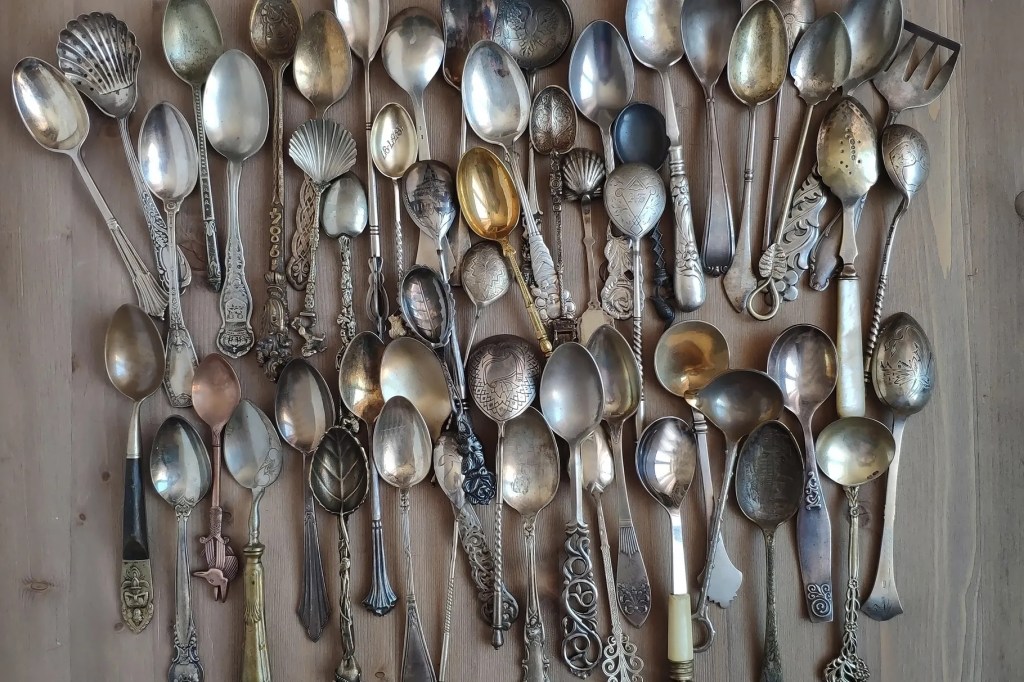
The kitchen community can’t believe it. The cutlery tray is in uproar. Who would have thought that a subset of their shining canteen would be a subject on the nation’s favourite teatime quiz show? The eponymous utensils are too stunned to speak. The teaspoons, lined up in metal-on-metal intimacy, hug each friend lying to his front with even tighter, thrilled excitement. They are literally beside themselves. The dessert spoons grin the breadth of their oval curvature – this is better than making music! – and the soup spoons puff themselves out proudly like the rounded stomachs they usually help to fill. The forks and the knives, affronted, try to think of something really pointed or cutting to say. But for once their natural sharpness is blunted.
In the nearby jar, the wooden spoons stand upright, typically stoical, stiff and silent. In contrast, displayed on the wall, the love spoon blushes: she has always had a soft spot for the charming Zander, imagining his delicate hands caressing the smooth curves of her intricate carving.
In the sink, the greasy spoon is the first to find his voice, declaring that he couldn’t give a salad toss for the programme. Nor its poxy presenters. A smart Alec and clever Dick as likely to eat an honest full English as they are to choose full fat cow’s milk over that rancid oat piss. The silver spoon, reclining, somewhat apart, in her bowl, shudders at this coarseness but is too refined to respond. Or to show her feelings like her embarrassing cousins, the riffraff in the top drawer (giving them ideas above their station), suppressing her delight in a barely perceptible shiver of the snowy particles piled adoringly around her. After all, few are born as privileged as she and there are standards to maintain.
The tablespoon is the first to recover his composure; calls for order, conscious of his seniority (and size) and the burden of leadership which, he frequently tells the others, he wishes he could share. But never does. The serving spoons are bigger, as are the ladles, but none of them possess his precision and popularity for measurement, and their laughable Brobdingnagian proportions are no challenge to his optimally sized authority.
He commands everyone pay attention to Mr Osman giving the answers. Some burnish as their names are mentioned. Even the foul-mouthed inverted snob lying in the sink can’t resist a tingle of pleasure when he hears his. But, unfamiliar with poetry, they are puzzled by runcible, and Uri Geller draws gasps. The apostle spoons, symbols of that famous last meal, cross themselves against the name of that metal-bending devil with whom one would sup at a very safe distance.
Afterwards, everyone (apart from the hybrid sporks and sporfs) agrees that the programme has a lovely name to which one can really relate.
My female relatives huddle round me in the bedroom, have brought up tea, china cups and saucers excavated from the sideboard, the clink of crockery on trays. They’re tweedy, big-boned women who like to think they taught me right from wrong, manners and the merits of hard work. Flat-bellied, temperamental women who’ve given up and call it happiness. We come from women who comfort men, men who never say no. Now they fill their best teacups, asking about my future, asking, ‘What is it you do now?’ and ‘What are you going to do now?’, which isn’t quite the same thing.
‘I’m going to write,’ I say. A smutty novel, I want to add, something lecherous and bawdy, make Fanny Hill look like your Sunday missals.
This always brings a sneer. It’s a smart answer but a queer occupation, especially at my age. They calculate my age mentally, trying to remember what happened around the time I was born, who died. They’re not too sure, but I’m no spring chicken any more. I should be doing something else by now, latching myself on to some unmarried man with a steady wage and a decent car.
‘You and your books,’ they say, shaking their heads, squeezing the good out of the teabags.
They don’t know the half of it. Don’t know the disguises I’ve made for them, how I took twenty years off their hard-earned faces, washed the honey-blonde rinses out of their hair. How I put them in another country and changed their names. Turned them inside out like dirty old socks. The lies I’ve told.
The final paragraph of this extract from ‘Quare Name For A Boy’, one of the fifteen short stories in Claire Keegan’s 1999 prizewinning debut collection (just re-issued by Faber as a timely stocking-filler), struck a chord when I read it today. Having opted for the Creative Nonfiction genre on my recently completed Masters degree with the Open University, I have spent much of the past two years turning the lives and characters of my family and friends inside out for the sake of my prose. Socks, underwear, bed linen. I took my pick. The dirtier the better. I call it memoir. They might call it a bloody cheek.
Of course, I have been acutely aware of the ethical dilemma of writing about people I know while trying to respect their privacy, dignity and anonymity. But for the sake of the story, this sometimes isn’t possible. After all, Carole Angier (Cline and Angier 2010, p.9) comments that life writers like herself are ‘private detectives who take the roofs off houses to spy on the lives inside…What we do is dangerous.’ I am also conscious of the vagaries of memory and the need to play a little fast and loose sometimes with the truth for literary effect.
While these stories remain unpublished and shared only within the semi-confidential confines of academic discourse with my university tutor and peer tutees, I can live with the problem. However, I foresee a time when I might want these tales to reach a wider audience. And then the seriousness of the issue will depend on which genre I choose: either turning characters and situations into fictions where the resemblance to anyone living or dead, or actual events, is, to coin a phrase, purely coincidental; or biting the bullet by giving people and places their real names for nonfictional authenticity and credibility, while submitting their appearance to a rinse-through at the hands of libel lawyers before risking publication.
The Times critic, Susie Goldsbrough, described ‘Antarctica’ as ‘sketches by the Artist as a Young Woman’ in her tepid review of the reprint of Keegan’s book. Although she acknowledges the author is writing about what she knows – from the rural Irish settings familiar to Keegan’s readers from ‘Small Things Like These’ and ‘Foster’ to the surprising locations of New Orleans where the author went to college – Goldsbrough notes a lack of ‘warmth’; that the stories ‘make no attempt at understanding – its men are unredeemed, its women unspared’. The title of the collection suggests that the younger Keegan was not unaware of this and not worried by it either. Goldsbrough concludes that in the work of the older writer, Keegan has become ‘strong enough to accommodate love’.
Perhaps being confident (and wizened) enough to bring some love and warmth into my stories (fictional or otherwise) points the way to counter-balancing the worries I have about how they might expose – or exploit – those about whom I write. Time will tell.
I leave the last word to Virginia Woolf in ‘Orlando’:
Memory is the seamstress, and a capricious one at that. Memory runs her needle in and out, up and down, hither and thither. We know not what comes next, or what follows after. Thus, the most ordinary movement in the world, such as sitting down at a table and pulling the inkstand towards one, may agitate a thousand odd, disconnected fragments, now bright, now dim, hanging and bobbing and dipping and flaunting, like the underlinen of a family of fourteen on a line in a gale of wind.
Sane people did what their neighbours did, so that if any lunatics were at large, one might know and avoid them.
George Elliot, Middlemarch
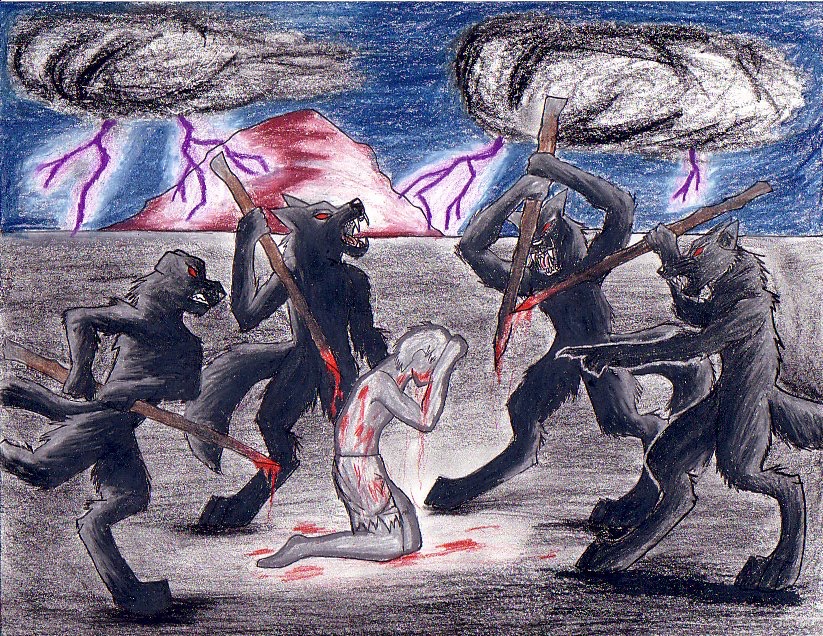
Kill the beast! Cut his throat! Spill his blood! Do him in!
The terrifying words from Golding’s novel burst upon Rufus’s mind at the corner of his street. He has misjudged the timing by about three minutes. He has no choice now but to walk through the menacing cacophony to get to his house at the other end of the road.
He sets his head slightly down, eyes straight ahead, strides forward. Only his peripheral vision glimpses the colourful tub-thumping figures gathered at garden gates, front doors and hanging out of windows. Unbelievably, two of his immediate neighbours (only one of whom he knows by name) are actually standing, clapping and chatting, right next to his own garden wall. With barely an acknowledgement, Rufus swings up the path and finds himself, breathless, behind the closed door before he registers that he has put his key in the lock and slipped, safe, inside.
‘Timed that badly,’ he grimaces, walking towards Rachel, cooking dinner in the kitchen at the back of the house, oblivious to the noise on the street and indifferent to its cause. ‘Can’t believe I didn’t make it back before eight o’clock.’
‘Eight o’clock?’
‘You know. Thursday. I’ve just had to run the gauntlet of the neighbours the length of the street.’
‘Oh, that,’ she shrugged, dismissively. ‘Of all the people,’ she added, amusement laced with genuine sympathy.
Rufus envied Rachel’s self-confidence and uncompromising individuality, scorning teams, peer pressure and anything else that smacked of collective action or thinking. She knew that Rufus would sometimes like to belong, not to be always on the outside. But despite all the therapy and the drugs, she also knew he would never manage it, preferring to hide away within the quiet, almost anonymous, safety of two.
‘Where does that come from?’ she mused. ‘“Running the gauntlet”.’
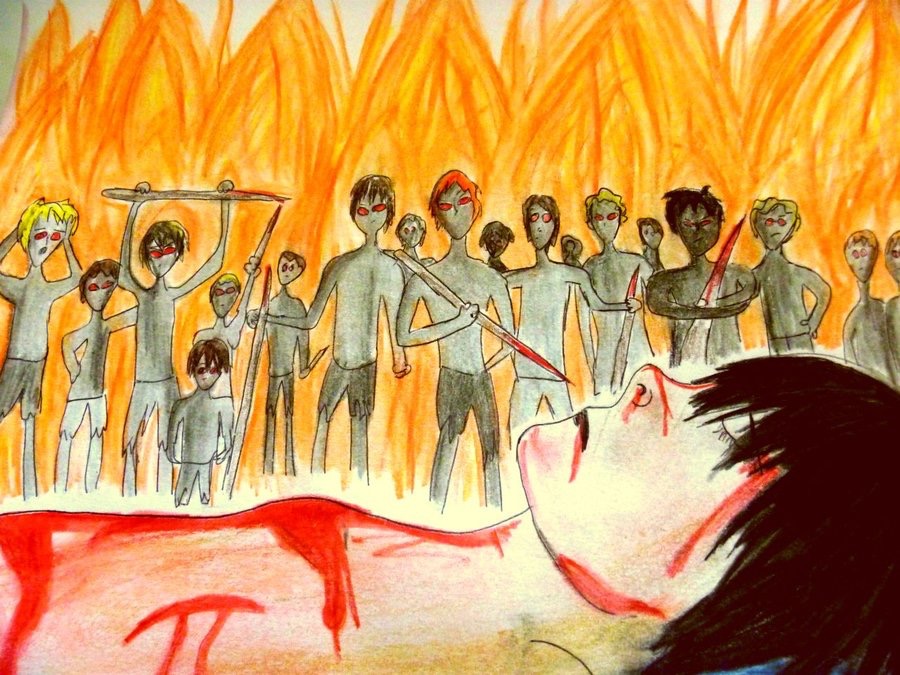
What Rufus’s research discovers is grimly fascinating. A military form of corporal punishment in which a guilty soldier had to pass between two lines of his comrades bearing sticks and cudgels with which to beat him. Goes back centuries, apparently. The ancients used it as a form of execution, a communal clubbing of the victim to death. In later years, an officer walked with a sword in front of the guilty man to prevent him from actually running to avoid the blows. A public trial of physical torture against which the individual had to set his face and try to survive. Rufus shuddered.
The doorbell rings. His neighbour. The one whose name he knows. He can see him, unsmiling, beyond the shutters of the window. What does he want? Rufus shrinks back into the room. All at once, he thinks he can hear uproar and the beating of sticks. A crowd, on either side of him, baying for blood.











 Robert James-Robbins