

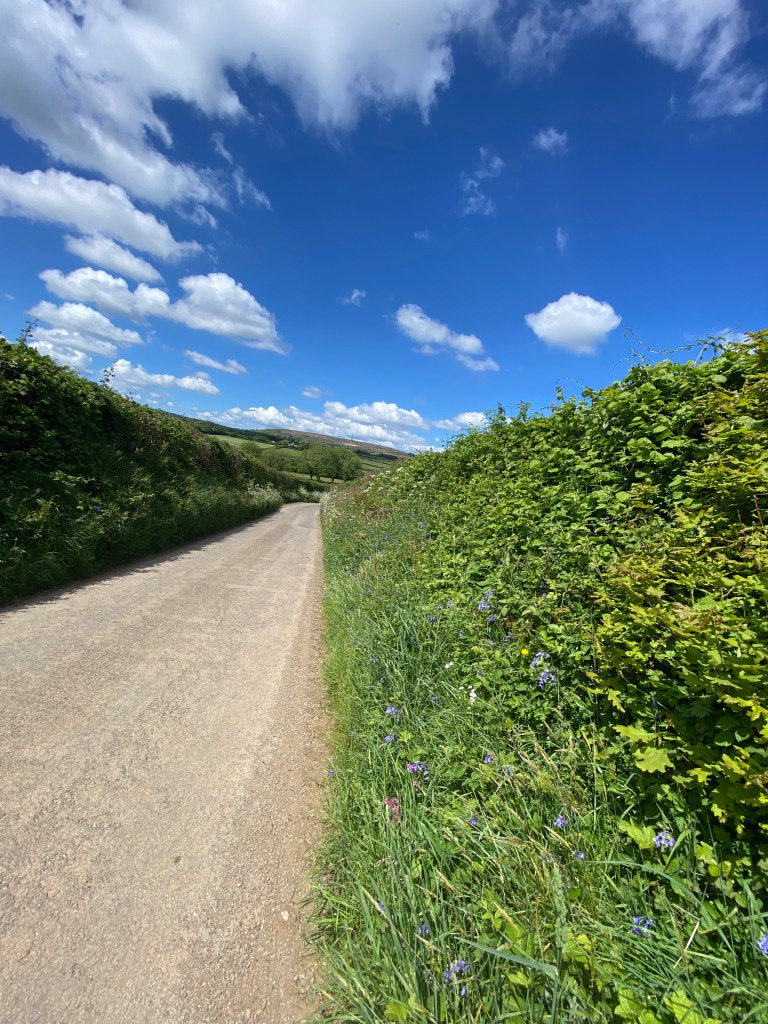
Cornish hedges typically resemble vertical flower meadows and can often have a field margin, ditch, stream or pool at the hedge base that creates another habitat opportunity. They provide a distinct local identity to Cornwall; there are approximately 30,000 miles of Cornish hedges in the county, which form Cornwall’s largest semi-natural habitat suitable for a wide variety of flora and fauna on a variety of scales.
Website, Cornwall Area of Outstanding Natural Beauty
Geseah ic wuldres treow,
wædum geweorðode, wynnum scinan,
gegyred mid golde; gimmas hæfdon
bewrigene weorðlice wealdendes treow.
I gazed upon the glorious growth,
wreathed in its worthy windings,
joyfully aglow, garnished in golden:
gemstones gladsome bandaged its scars,
The wielder’s tree.
These are the words early on in the description of the speaker’s vision in The Dream of the Rood, one of the oldest works in English literature. The trippy narrator, apparently in conversation with the cross upon which Christ was crucified, is at first dazzled by the colours and radiance of the gems in which he finds the tree bejewelled.
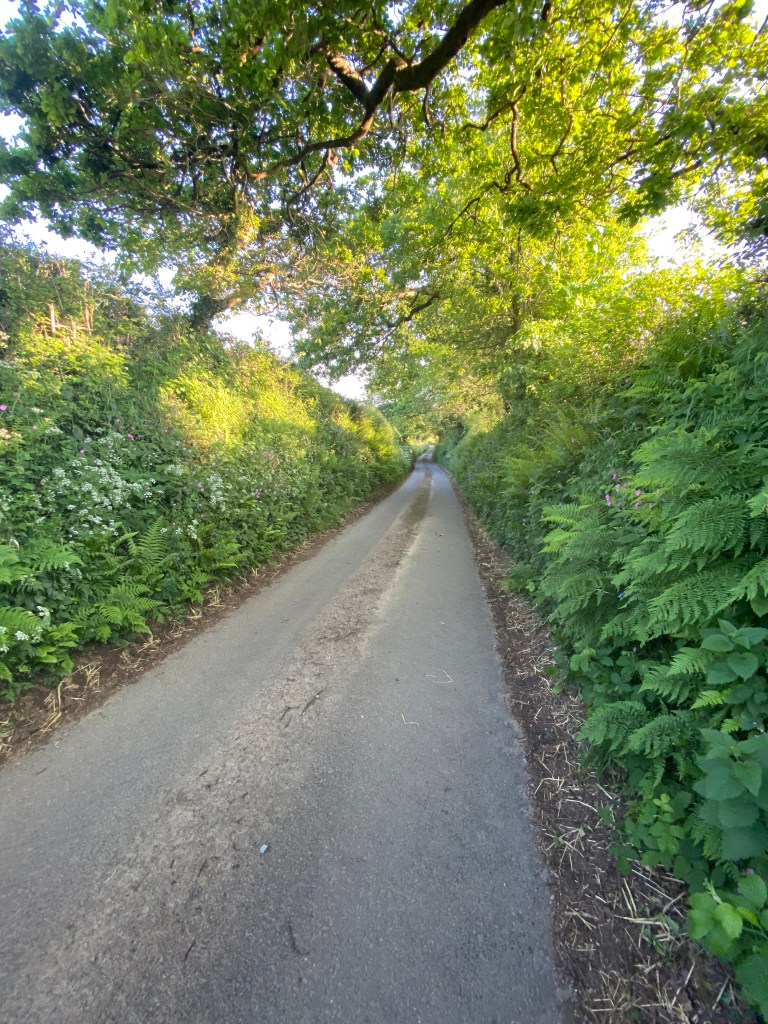
The poem comes to mind a few days ago when I get to walk once again the forty minutes of stunning Cornish lane connecting our home to the southeastern tip of Bodmin Moor, an almost daily routine which a painful medical condition has precluded for nearly two months. But with surgery five days behind me, and after some tentative pain-free circuits of the village, I once again find myself on the route with which I have developed an almost visceral bond since I moved to Cornwall just over four years ago.
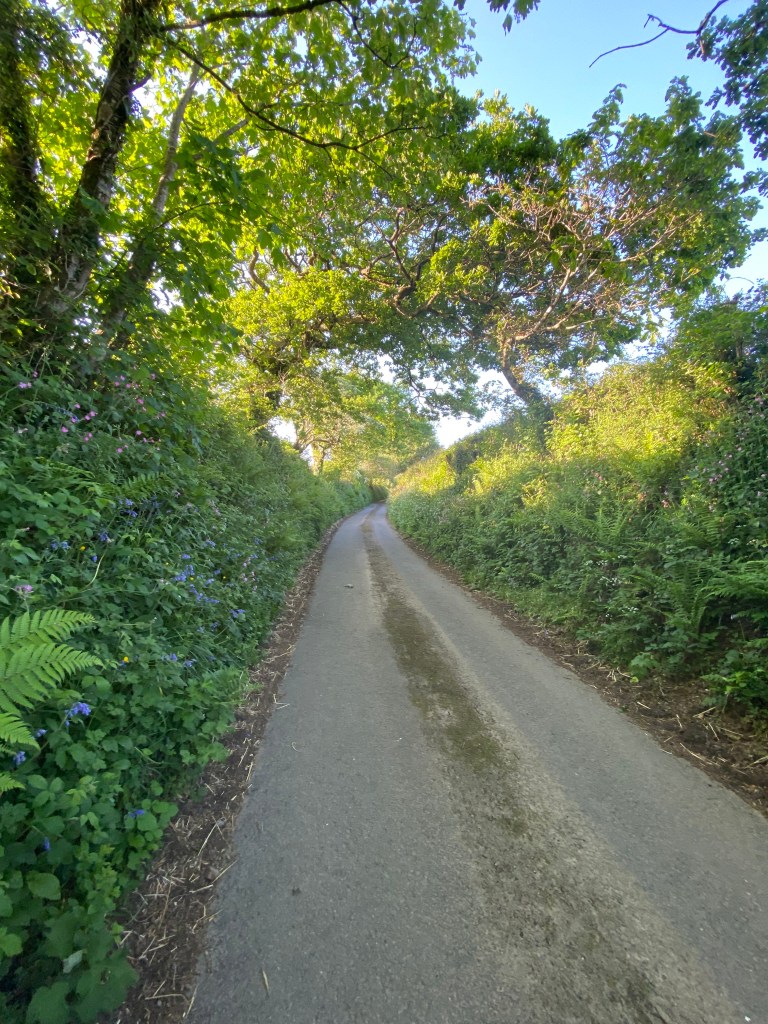
I am not hallucinating, nor experiencing the side effects of the painkillers I have been prescribed but do not feeling the need to take, but what I see as I walk could be described as a vision.
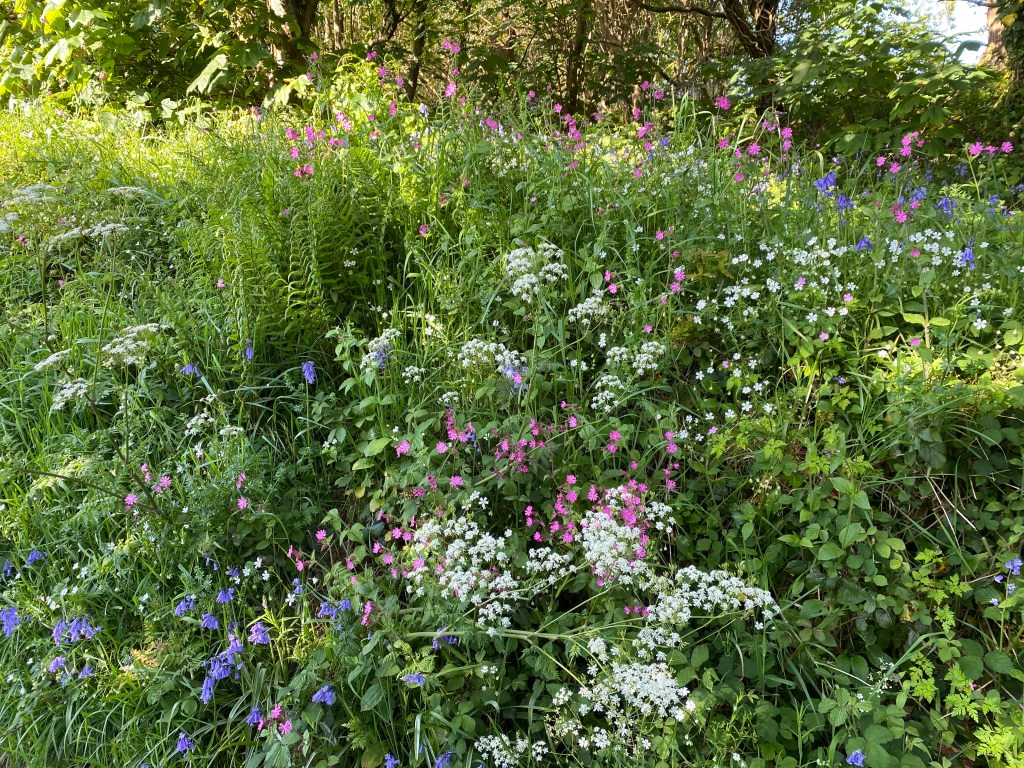
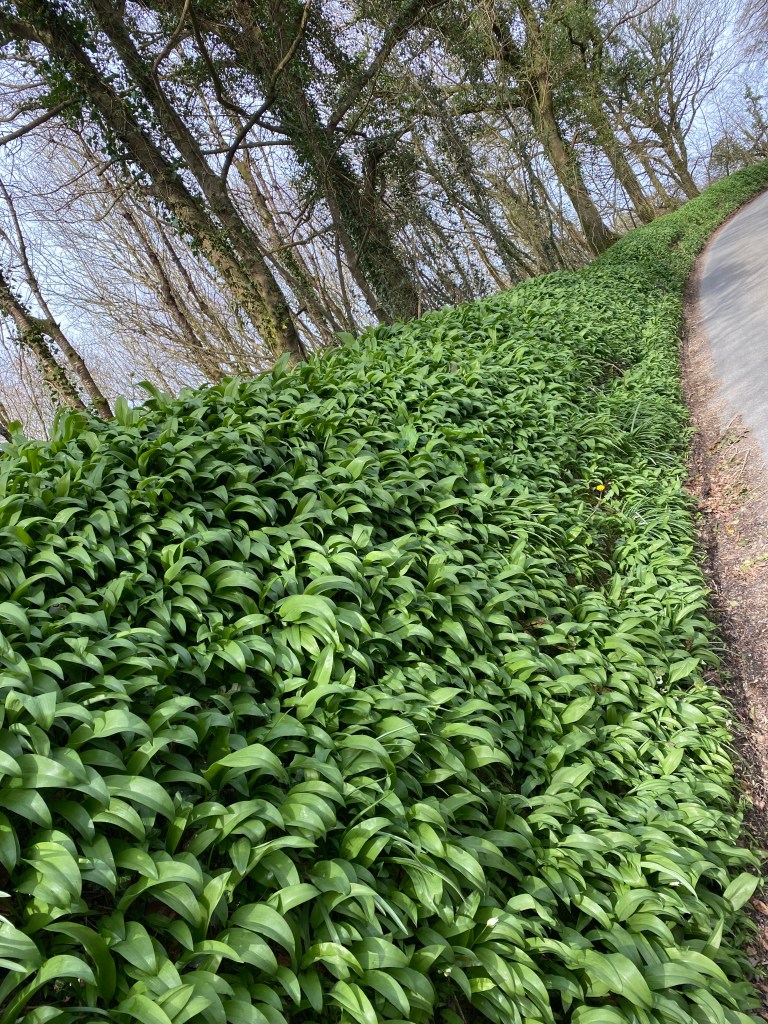
A corridor of colour blazes ahead to my right and left. Purples, pinks, whites and yellows teem against a backdrop of lush, new season greens, healing dressings for the wounds of winter. The verdant sight is complementary therapy for my own knitting scar. No gem-encrusted nor blood-stained cross as in the ancient poem, this is the so-called ‘vertical meadow’ that is the Cornish hedge; the scaffold, not for impending tragedy, but a gloriously unapologetic floral wildness, though as much a symbol of hope and rebirth.
It was only as we neared the first anniversary in 2022 of our uprooting from London to the southwest, that we discovered the auspicious fact that the 5th of March, the date on which we became resident in the small village of Merrymeet, is St Piran’s Day, the national day of Cornwall, named after the most important of the county’s three patron saints. A happy meeting indeed of place, time, and circumstance.
The date seems to mark the start of a new kind of calendar whose manifestations in nature will have as strong an influence over me in the coming years as ever the academic calendar did in my past. Hence, I begin to map out the year in the wildflowers and plants – many with Cornish names and working to a timetable, thanks to the climate, ahead of the rest of the country – burgeoning in the narrow, twisting veins that crisscross the county’s landscape.
March to March. The Calendar according to the Cornish Hedge.
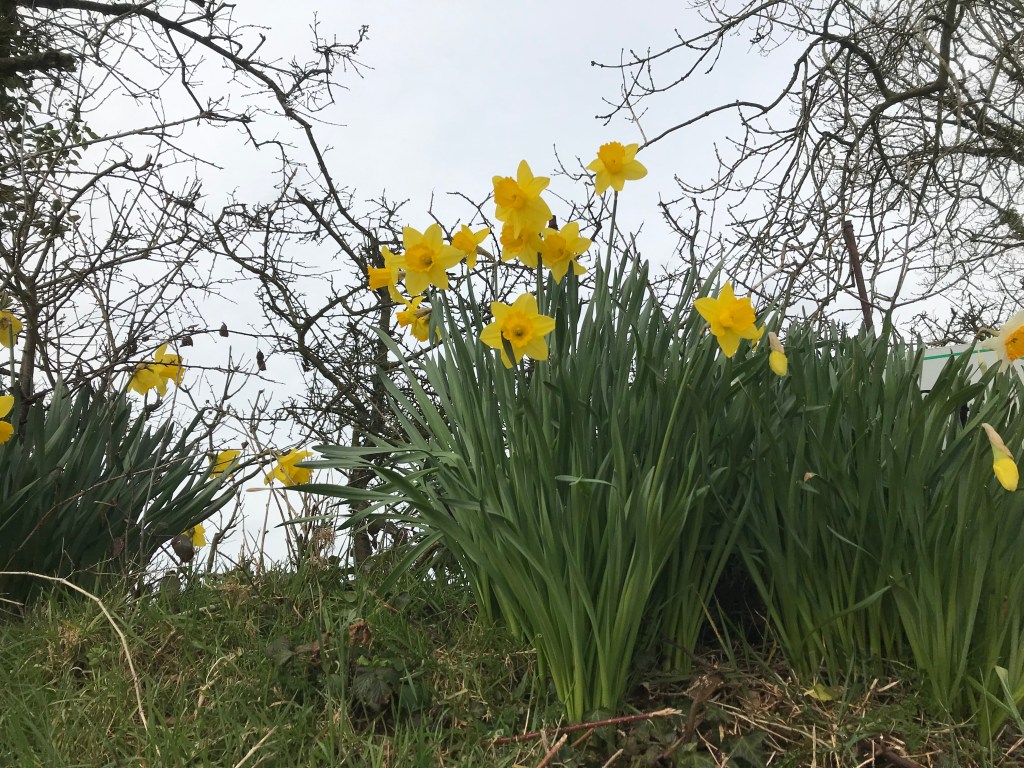
By St Piran’s Day, at the start of March, both are in full vigour, having replaced the delicate snowdrops of late winter. The colour similes of the daffodils are mostly primary: like gold, egg yolk, bumblebee. It is no surprise that Cornwall is the world’s largest producer: over 30 million tonnes of bulbs each year. The flowers are big and bold, but their glory is short-lived, rarely making it to the end of Lent from which one of their nicknames derives.
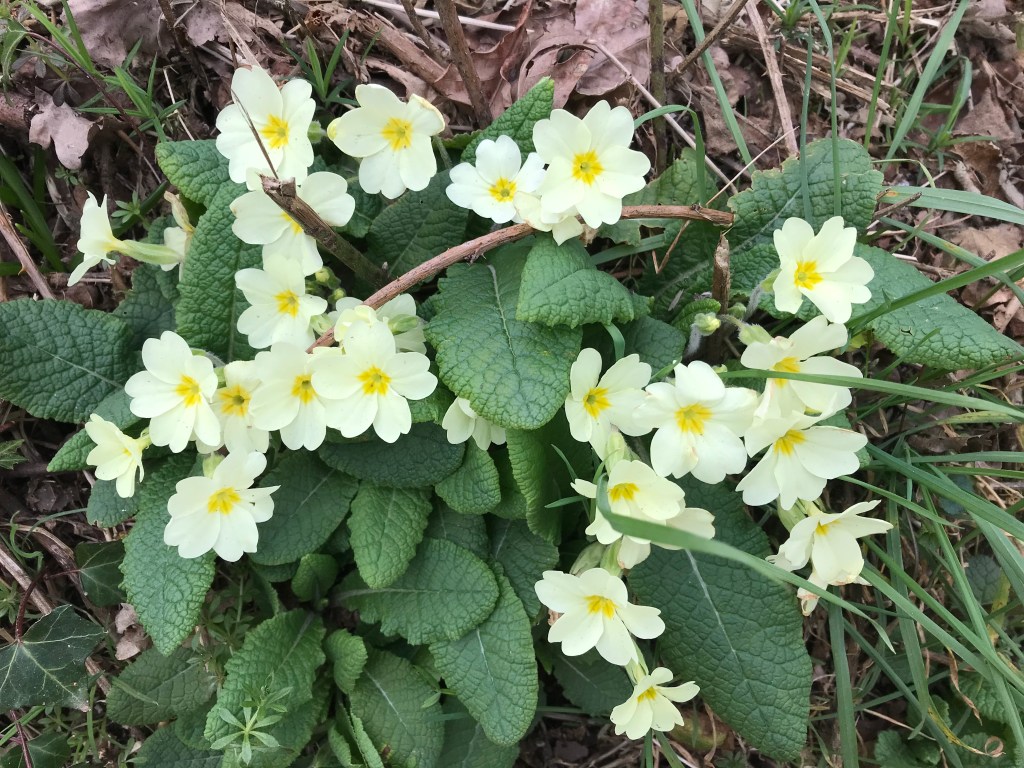
The more modest primrose is less flamboyant but hardier. Neat circles of creamy lemon petals enclose a small golden intensity at each centre; cliques of delicate flowers sitting protectively together among rosettes of rough, thick and short tongue-like leaves. Thus defended, they stay the course in defiance of Perdita’s assertion in ‘The Winter’s Tale’ that their early flowering risks missing pollination, that ‘pale primroses…die unmarried’. From my mezzanine study overlooking the neighbouring graveyard, multiple clusters of primroses pay nature’s tribute to the dead from late February to late April and clearly have had no issues with cross-fertilization.
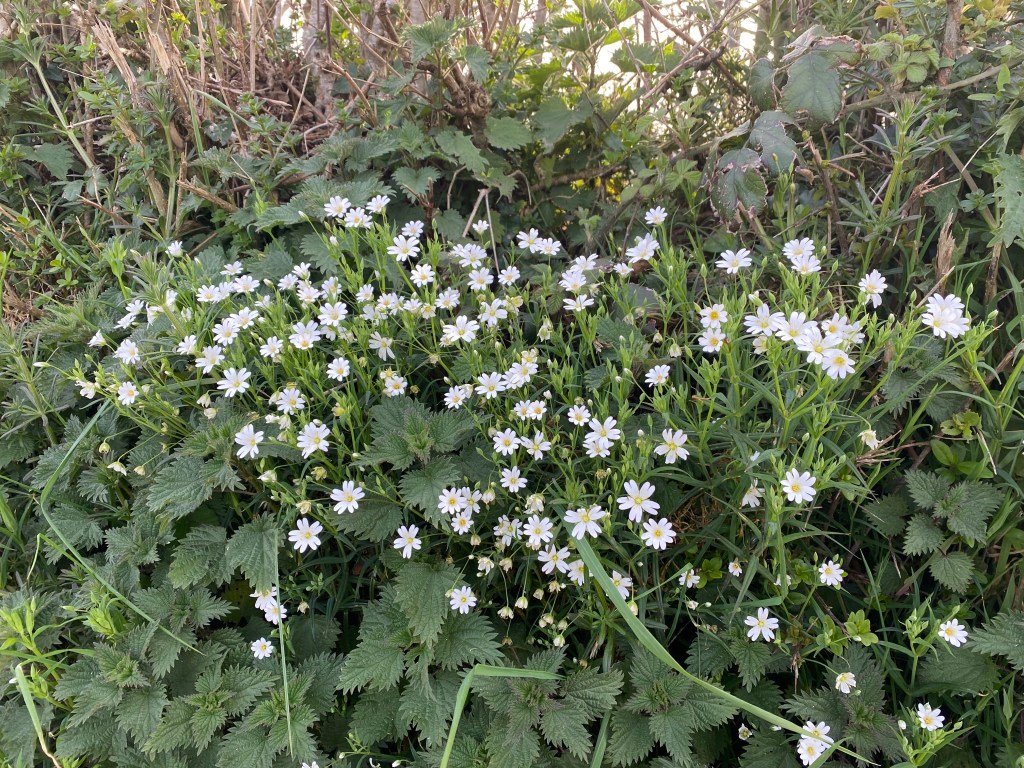
A galaxy of small white flowers that could be mistaken for daisies but have a standard five defined pairs of rabbit-eared petals. The Latin name reflects their star-like appearance and that they were once thought to heal bones; the prosaic English tag, the folklore that they provide a remedy for pains in the side; the Cornish ‘adder’s meat’, that a more suspicious mind sees sinister fork-tongues in the bushes not harmless bunny-ears. Picking them apparently brings on thunderstorms and, in Cornwall lore, will also anger the pixies, who see the flower as their property. The proliferation of their growth is reflected in the many different names by which they are also known: star of Bethlehem, snapdragon, daddy’s shirt buttons, headaches, stinkwort, wedding cakes, milkmaids and brassy buttons.
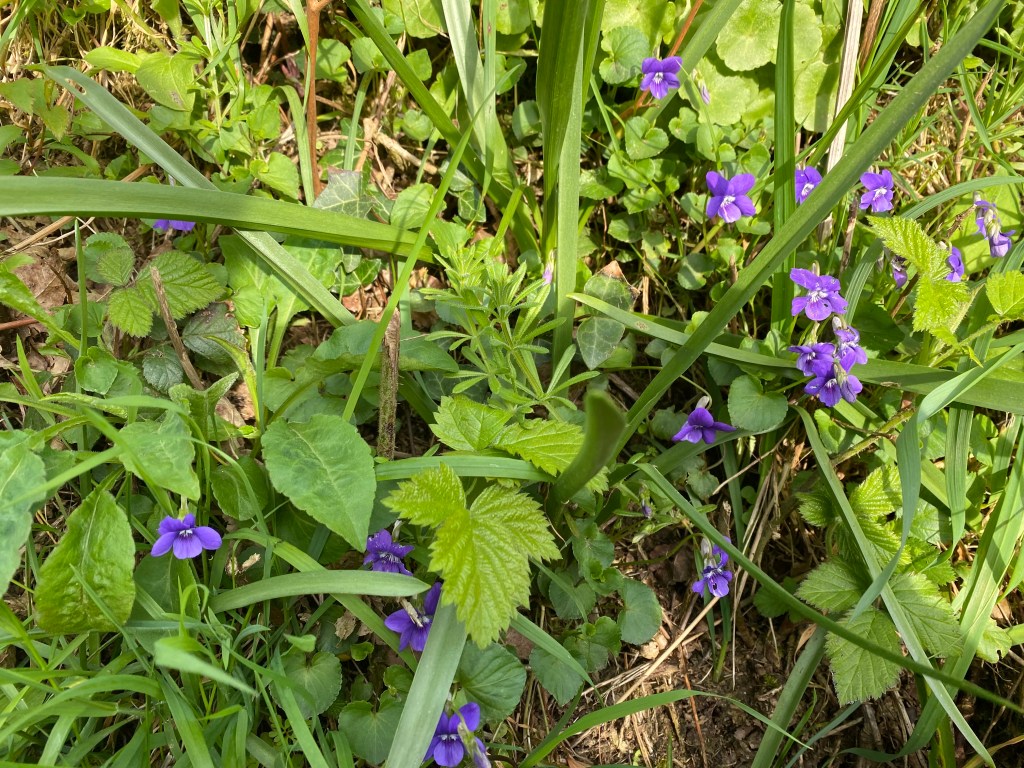
An exquisitely pretty flower whose petals from one angle do resemble canine ears and panting tongue; no scent but vital food for caterpillars of several rare species of butterfly and nectar for all comers.
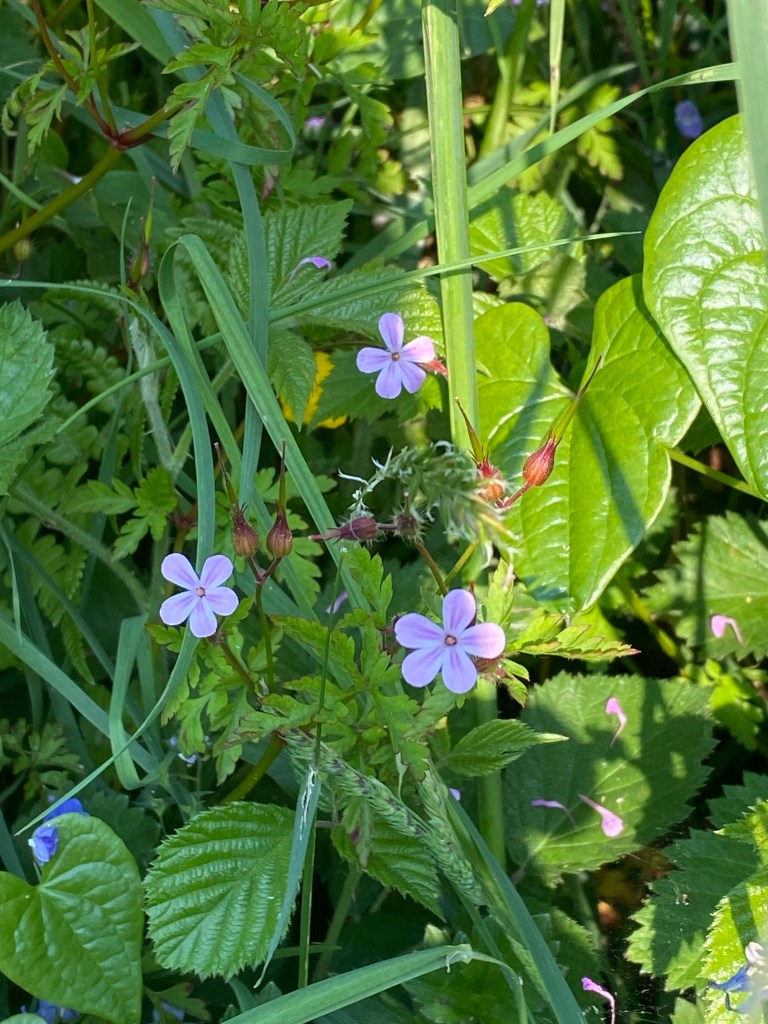
Known for its pretty pink flowers and delicately multi-divided ‘tripinnate’ leaves, often red; traditionally used as an antiseptic and thought in medieval times to benefit blood disorders and to staunch blood flow, explaining the etymology of ‘robert’ (always with lower case ‘r’ in English) as in ‘ruber’, meaning red. Used also to treat stomach upsets and nosebleeds. A flower believed to bring good luck and fertility, its other names include red robin, death-come-quickly, stinking Bob and squinter pip.

Tall-growing, flamboyant pink plants, craning for attention between the other flowers (no shrinking violets, they), competing fiercely with the stringy cow parsley whose greater height is no match for the Campion’s vibrant colour; ‘silene’ could refer to Silenus, in Greek mythology, the merry, drunken woodland companion of wine god, Dionysus – and you can see why from its uninhibited flashiness and cheek-red complexion; its dioeciousness (having female and male flowers on separate plants) perhaps explaining my Worcestershire mother-in-law knowing them as ‘hens and chickens’.
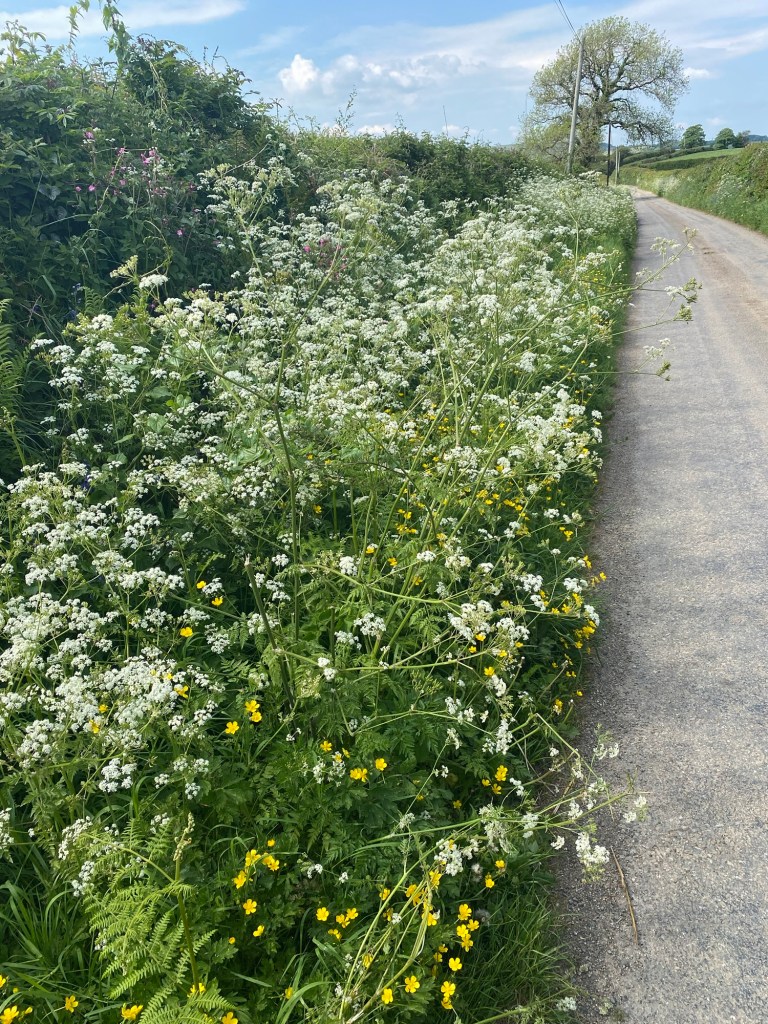
Ubiquitous but short-lived white gangly sprays briefly proliferate, its folk name, ‘Queen Anne’s Lace’ easy to understand and impossible to miss. Sometimes known as ‘Mother die’, the result of a rather extreme strategy to deter children from picking the plants for fear of causing the death of their mothers. It is probably explained by the plant’s similarity to hemlock, which could prove as deadly to the underage picker as to their parent.
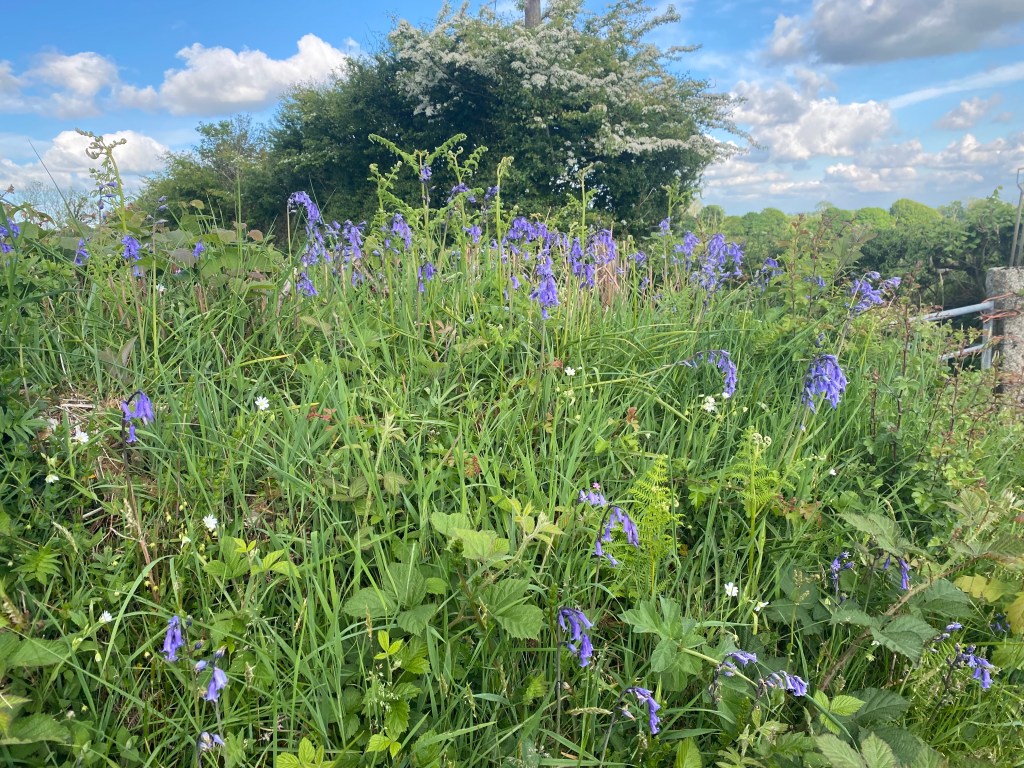
At their height, a wondrous sight in woods such as at in the Lost Gardens of Heligan and now, for the first time for us, teeming in hedges; the nation’s favourite flower, beating primroses into second place; the British Isles is home to half the world’s bluebell population; as well as beautiful, ancient and versatile: for example, the sap used for gluing arrow feathers and stiffening Elizabethan ruffs; no better example of the aesthetic impact of purple mass against green, the added white of other floral neighbours making a re-created Eden – and just as well, as it’s a prelapsarian symbol of constancy, humility, gratitude and ever-lasting love, even if bound up in numerous stories and myths of danger and even death courtesy of malevolent fairies.
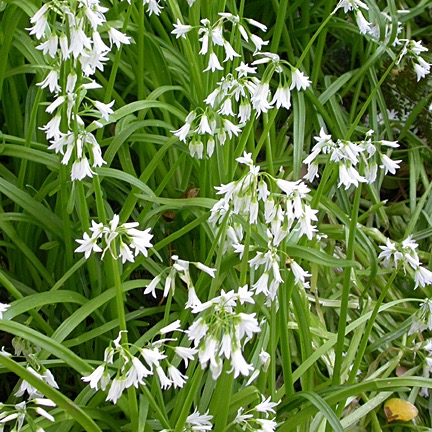
Three-cornered Leek – alium triquetrum – kennin trihornek
A glorious plant, with its triangular stem and elongated, bell-shape white flowers, especially when found in large numbers; easily mistaken for the oxymoronic white bluebell or for wild garlic, with which it shares some, though less pronounced, eating qualities as a member of the onion family; a controversial ‘incomer’, and somewhat invasive, it is a threat to the native bluebell like their Spanish cousins.

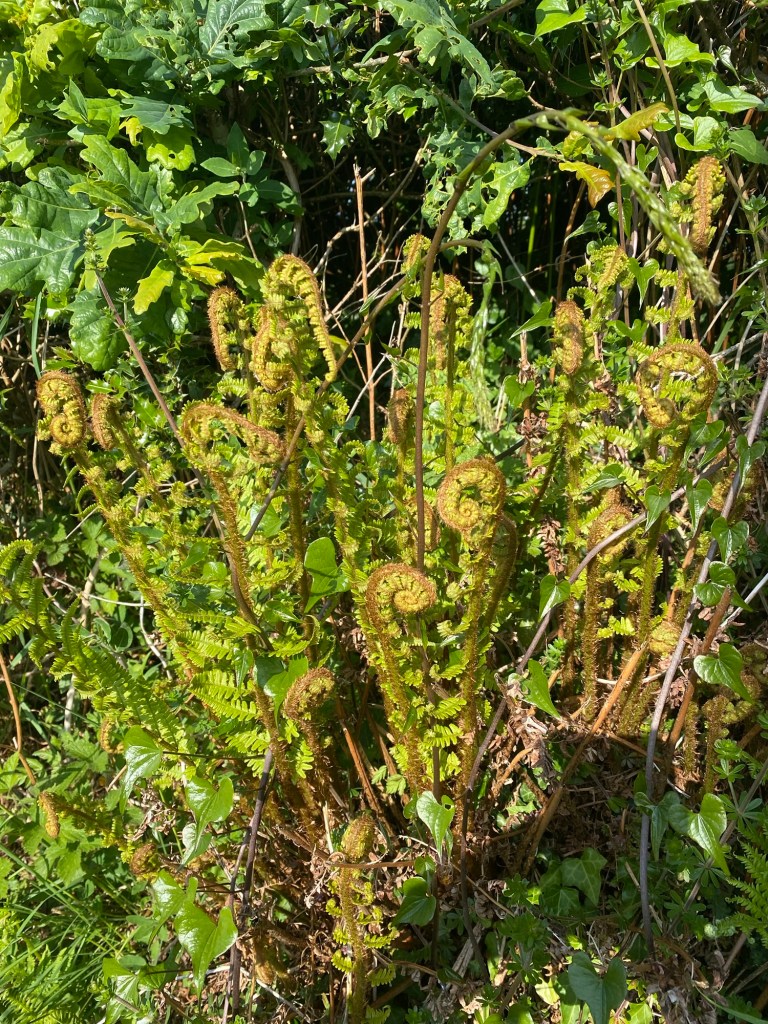
A spore-reproducing fern rather than a pollinating flowering plant, ubiquitous on moors and in hedges. Tentacle-like fronds unfurl atop straight cobra-upright shoots until it achieves a green spread, one metre tall by the same wide. Dangerous to grazing animals, the poisonous hydrogen cyanide released if they damage the young fronds.
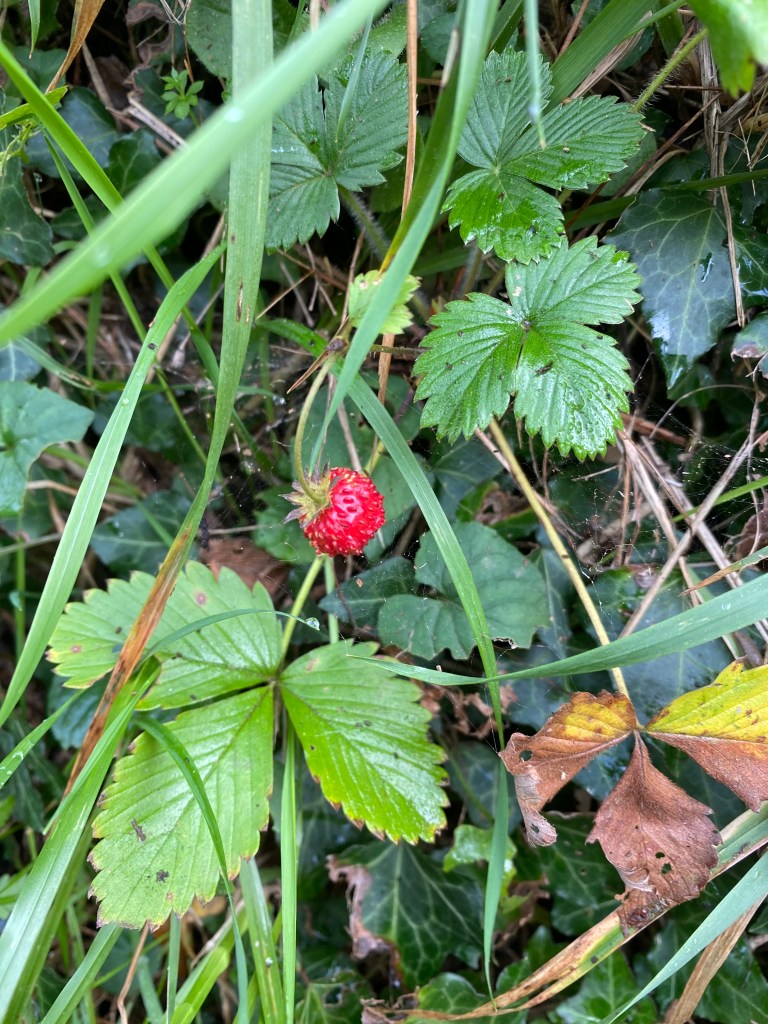
No Cornish name but for a few weeks in early summer it is difficult to resist these tempting red warning sirens of the close at heal bramble; tiny red jewels of sweetness you only notice if you scan the hedge close-up.
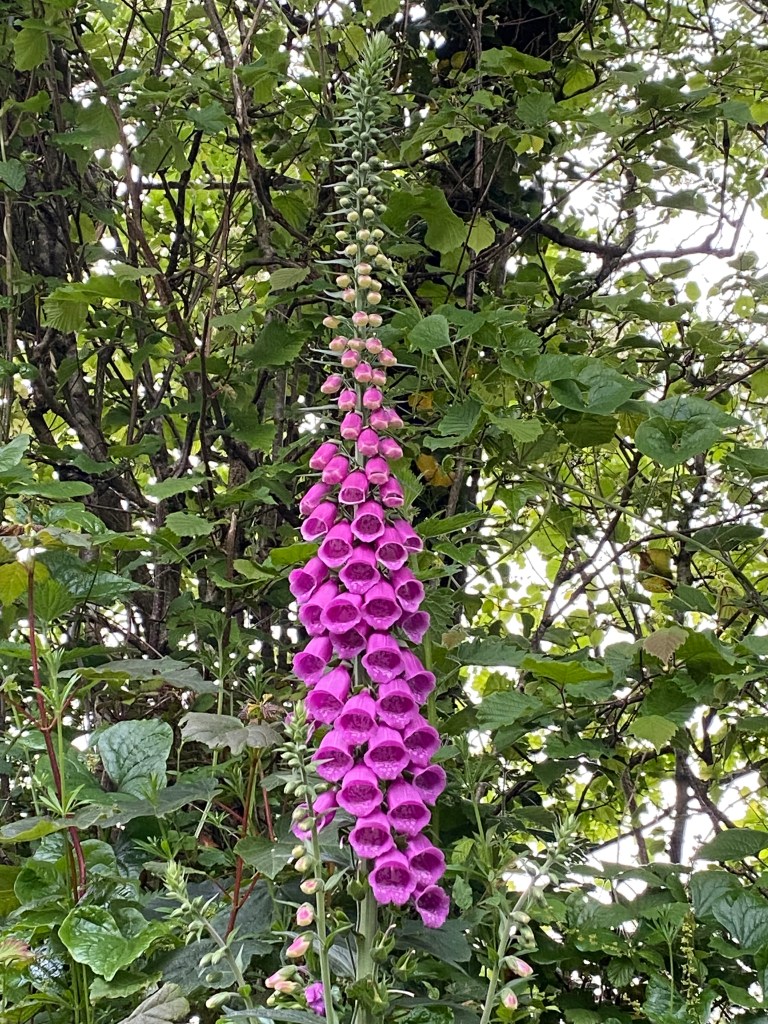
Looking like elaborate wind instruments for woodland sprites, their tall spikes bear an abundance of large, pink-purple tube-flowers, a fanfare declaring the unmistakable arrival of summer; stories to explain the name abound, stretching back to Anglo-Saxon times, some involving foxes, others bells and fairies; what is known for certain is that it is a poisonous plant, and can be used in the production of a heart drug, digitalis.
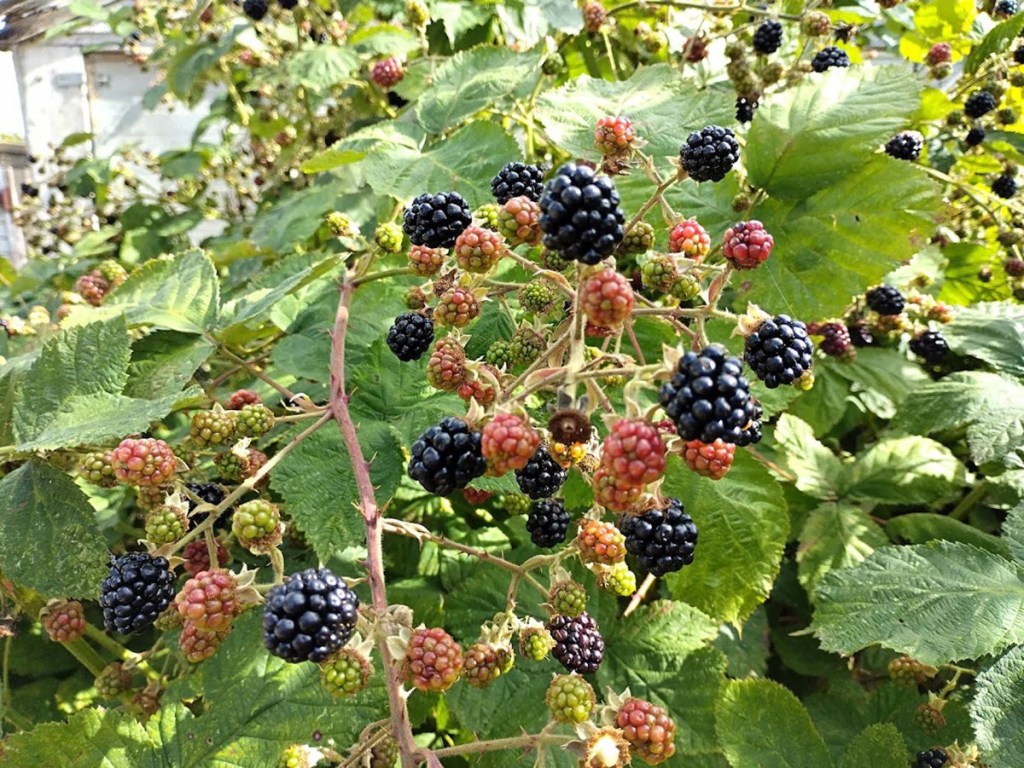
Blackberry Picking 2022 (With thanks to Seamus Heaney)
Does anyone pick blackberries outside London, he wonders. On the Parkland Walk between Highgate and Finsbury Park, one evening last August (the last summer he was to spend in London after thirty-five years), the atmosphere was almost heady as he and other pickers broke the city taboo of silence to share congratulations on their harvests, tipping off strangers as to the location of the best brambles, and swapping recipes. His: Prosecco, sugar, a food processor and a sieve. Courtesy of Ruth and Rose, the River Café cooks.
A lithe, dark-skinned, beautiful man with a carrier bag of squashed, black booty and a guitar on his back listened to him in wonder. He drank in his words. Gazed admiringly, possibly slightly stoned, at his Tupperware container, full to the brim. Was this the lust for picking that Heaney had in mind? He bad the young man and his friends farewell and heard them working out the nearest place to buy their own sparkling wine. A connection had been made but, as usual, not pursued – other than in imagination, where the man took up the offer to share the spoils, abandoning his companions to stain his tongue with a dizzying glass of summer’s blood somewhere more private.
This year, he is picking from a Cornish hedgerow teeming with temptation. He has followed closely the story of the hedgerow ever since he moved here in March, on the threshold of spring. It’s been a tale, in roughly monthly instalments, of primroses, daffodils, wild garlic, bluebells, foxgloves and ferns, and in July, tiny wild strawberries, the warning sirens to the late August blackberries. The black beauties stir excitement. He can barely keep his hands off them. Official picking trips armed with the ubiquitous plastic containers are interspersed with spontaneous, almost furtive gorging in the lanes on evening walks, dark smears and stains on his fingers betraying his gluttony. Or is it lust? How deadly close those sins are related.
But no one else is doing what he does. No evidence of naked sepals, recently shorn of their black blobs by any other hand. No strangers at all, in fact. No encounters, either brief or imaginative, and certainly not exciting. Like Heaney, but for very different reasons, he feels like crying.
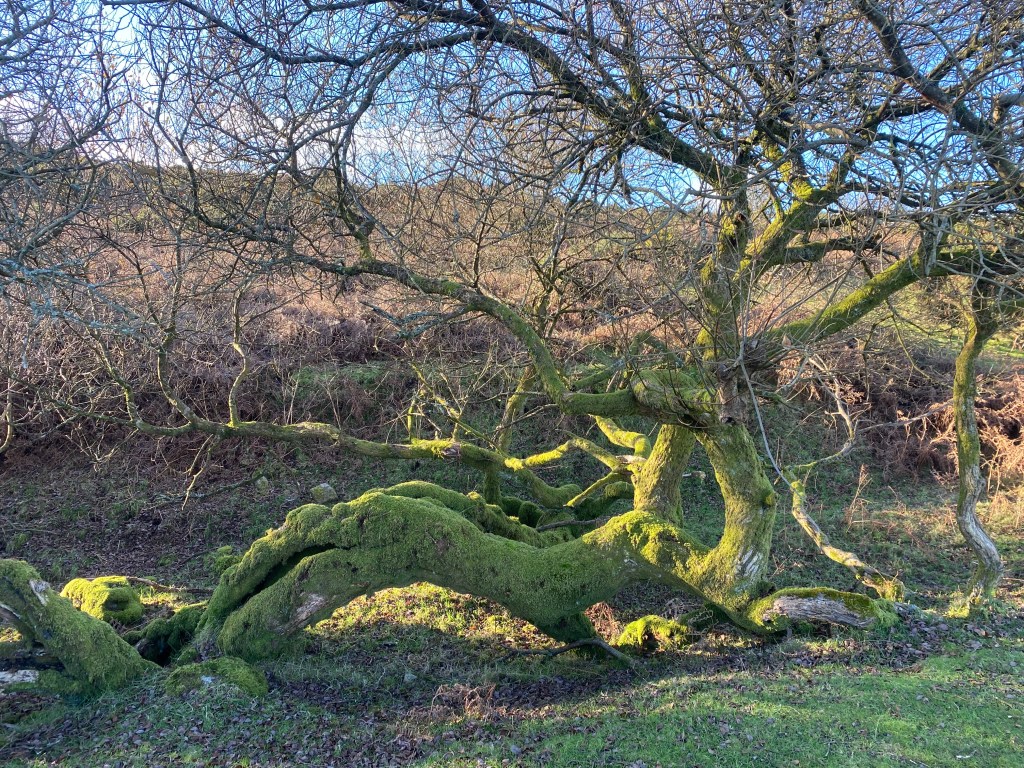
In winter, leafless trees shimmer with a sage-grey softness that, from a distance, could be mistaken for snow or the delicate beard-like fibres that sprout from mussel shells. At other times of the year, different species coat the trunks of trees in a baize of green, too innumerable to distinguish to the layman.
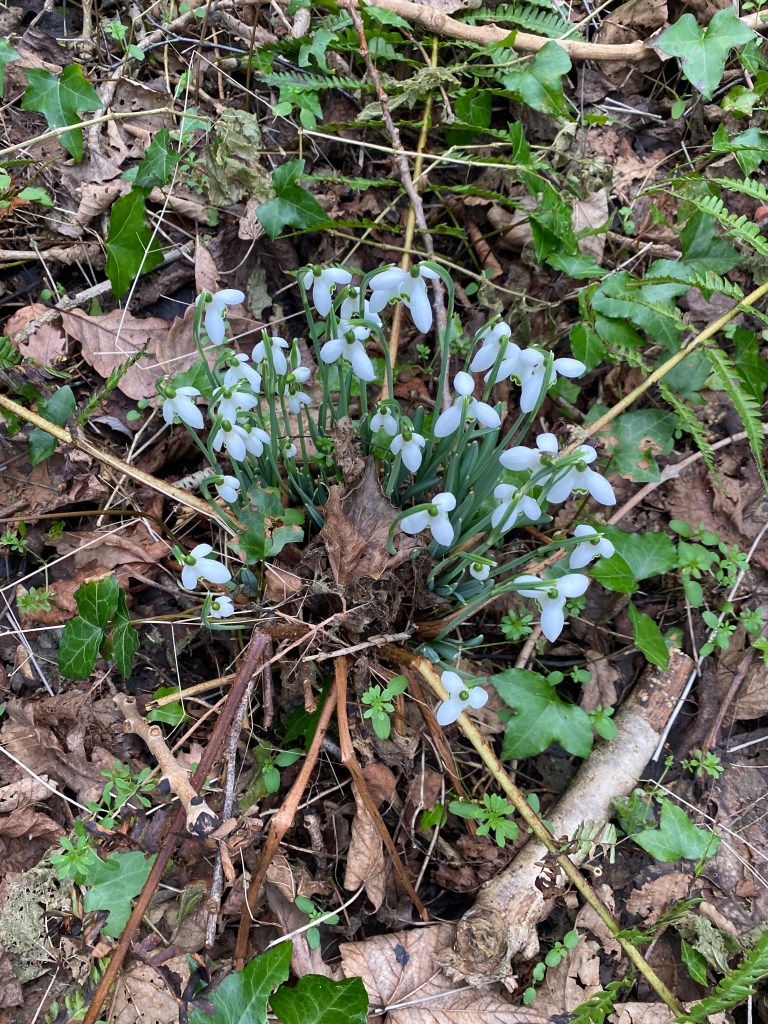
The first sign of the impending spring and warmer weather, and symbol of hope and better times; however, increasingly earlier flowerings are yet another warning that the planet is becoming too warm, too quickly.
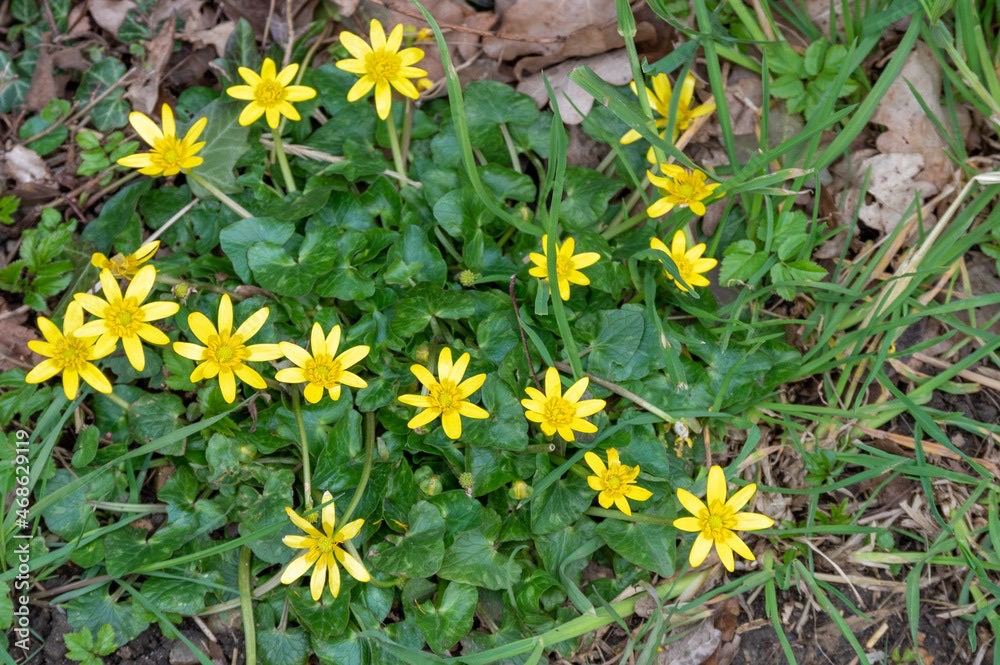
Initially looking like a buttercup but only a distant member of the family – has more slender petals than its cousins and much earlier flowering – by St Valentine’s Day, in fact, and with heart-shaped leaves, two mutually helpful clues to avoid misidentification.
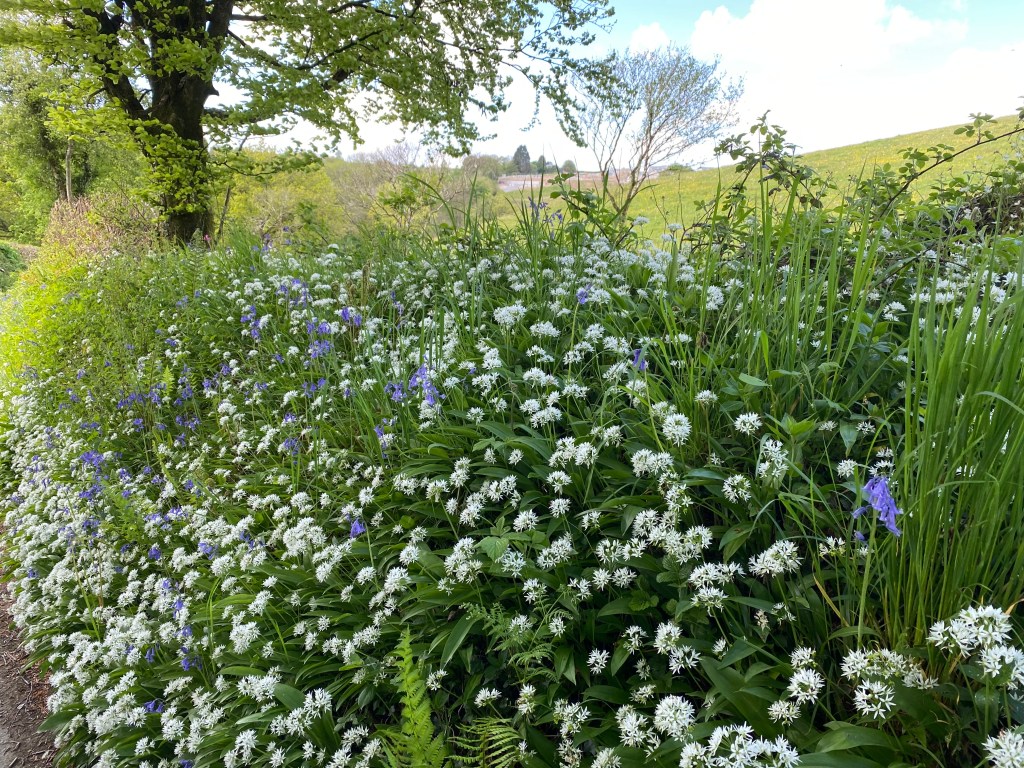
Wild Garlic
Allium ursinum, ramson, sometimes ransom,
Old English hramsa: all Northern Europe
has a name for wild garlic, that startling white,
its pungency. Pick and they quickly fade
but in the mass – and what mass! – overwhelming.
In Cornwall they form thick banks along the lanes
and fill damp woods, making me long to be
propped on beds of amaranth and moly –
and truly I find they’re magic: the moly-garlic
Hermes gave Odysseus to protect him.
Now hostage to fortune, how willingly
I’d pay a king’s ransom – in ramsons, of course,
whole armfuls of them, a wild cornucopia –
for the smallest chance of release, remission.
Mary MacRae (1942 – 2009)
Inside the Brightness of Red, 2010, Second Light Publications
 Robert James-Robbins
3 responses to “Visions of Cornwall”
I love this, the poem, the methodical listing and descriptions, the change of tack with the blackberries.
Also it has helped me name a few of the flowers I found along the way in Scotland. Not so many in the hills but plenty in the lowlands and around the lochs.
LikeLike
Thank you. What I didn’t include was a photo of the sunbathing adder which scurried out of my way as I walked across the Moor for the first time after surgery on a sunny afternoon last week! It was quite big – and the first adder I’ve ever seen, anywhere, not least on Bodmin Moor in the four+ years I’ve been walking there.
I don’t know which of us was more frightened – but it slithered away too quickly for me to get a photo. I’ve been keeping my eyes peeled for any more serpentine encounters on subsequent walks. I blame the unseasonably dry, warm weather.
LikeLike
I know, we do need some rain, but ideally after Hay!!
LikeLike